


A fundamental move for the western horse and rider to master is the sidepass. This movement of your horse’s shoulder and hip at the same time requires just the right cues. If you want to compete in ranch riding trail classes, you’ll be using a pole to guide you sideways.
In a ranch trail class, the average/starting score is 70, with obstacles scored +1 ½ to -1 ½ in half-point increments (a 0 is “correct,” but neither good nor poor). The goal is to rack up those pluses!
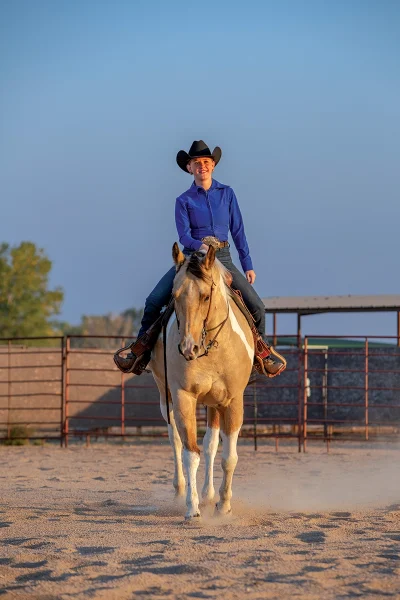
Trainer Ariel Hug helps you position yourself for a perfect sidepass—just like you may see in a performance class. As an Interscholastic Equestrian Association (IEA) coach, Ariel prepares middle and high school students for western show events. She says sidepassing is often a skill needed for pattern classes as well as for ranch riding and trail events. Plus, it’s useful for opening gates while mounted or trail riding.
Here, she coaches Sophia Goetz and Gatsby to tune up their sidepassing cues while working at the fence line before lining up with the pole to cue for a plus-scoring sidepass.
Breaking Down the Sidepass
If you haven’t practiced sidepassing before, make sure to practice with a fence or solid wall in front of you to “close the front door” of the horse’s forward motion. This will help your horse tune into your cues and make sure he’s moving to the side. He is less likely to think you’re asking for a small circle.
“The horse can only move sideways or back,” Ariel says. “This is what we do when we’re teaching a horse for the first time or if a horse is having trouble.”
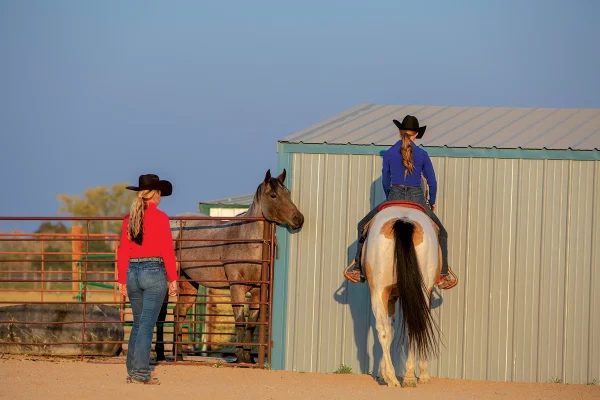
To cue your horse for a sidepass at the fence, ride with two hands and pull your horse’s nose to the opposite direction from where you want to go. If you want to move to the left, pull the horse’s nose slightly to the right with light rein pressure. Holding this position will help a horse to know that he should move to the side instead of circling with his nose in the direction of the turn.
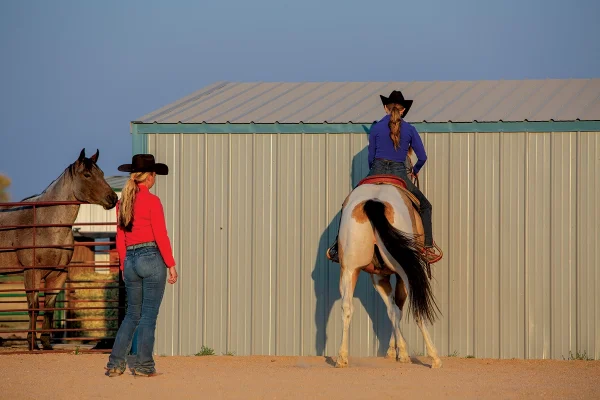
Once your horse will easily step to the side and you don’t feel him wanting to move forward, practice in the middle of your arena with a pole to help you make sure you’re moving evenly to the side.
Pole Position
“Lining up well can make or break your sidepass over a pole,” Ariel says. “Line up the pole with the ball of your foot so you’re in the middle of the pole as you start, then pay attention to keep this position.”
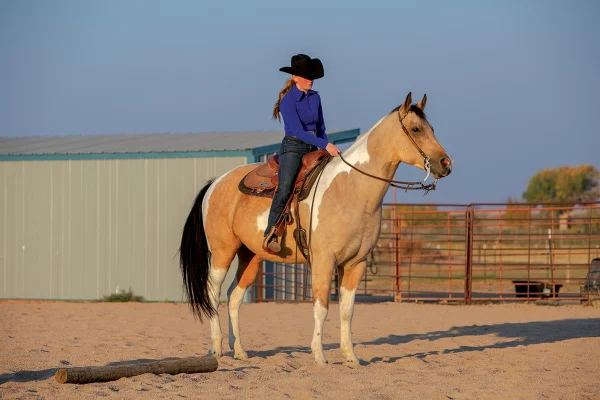
To go to the right, gently bump your left leg as it hangs naturally against the horse’s side—not reaching back or forward. Using your leg, the horse moves away from pressure.
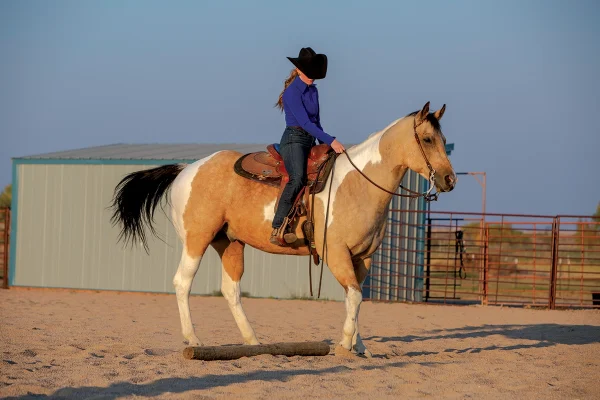
Use your aids to keep the horse centered over the pole and know if you need to move your hands forward to move the horse up or block the forward motion.
“If you’re not lined up well, the horse will move forward or back over the pole,” Ariel says. “Even a trained horse will respond to your cues and can hit the pole if you don’t cue well.”
If your horse’s shoulder moves too fast, move your hand back to slow the shoulder and keep it in line with the horse’s hip. If he moves forward over the pole, keep light contact and block the forward motion, ensuring that your cues obviously “open the door” to the side. If needed, you may move your cueing leg forward or back to ask the horse to move his shoulder or hip to get in line.
If it’s going well, practice the move from left to right, then go back over from right to left. If your horse is just learning the sidepass, make sure to master one direction first or offer a break before cueing the other way.
This article about teaching your horse to sidepass appeared in the January/February 2025 issue of Young Rider magazine. Click here to subscribe!

