


The history of dressage has ancient roots. One of the earliest recorded trainers was Xenophon of Athens, a Greek military leader, philosopher, and historian born in 430 B.C. In his writings entitled On Horsemanship, he discussed the best qualities to look for in horses and non-abusive ways of training horses in classical dressage for the military and for general riding. Xenophon’s book is still sold to this day.
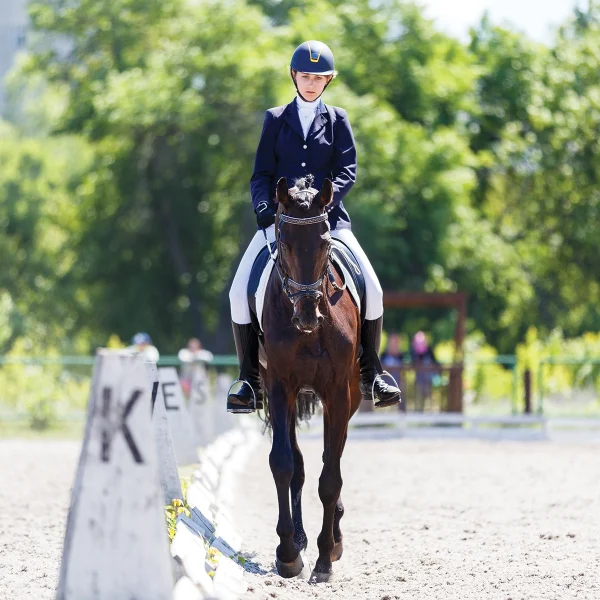
Modern dressage evolved from Xenophon’s philosophy, and today dressage competitions come in levels of tests where knowledgeable judges score each movement from 0 to 10, with 0 being “not executed” and 10 being “excellent.” It’s common to have a rider earn all 6s (or 60 percent overall) before moving up to the next level.
Dressage became an Olympic sport in 1912 at the Games in Stockholm, where 21 riders represented eight countries. Only military officers were eligible to compete until 1953, when the rules changed to allow non-military men and women to ride.
Dressage trainer Betsy Van Dyke feels that each horse has a different story and believes that understanding how they think is what best helps achieve harmony with them.
Learn the Basics of Dressage
We asked Betsy what some important basics are that she has all beginners practice.
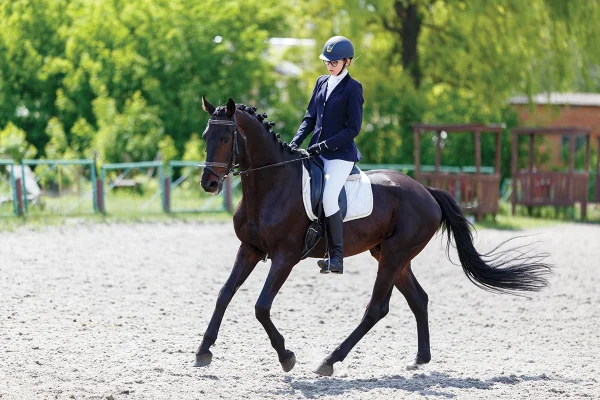
◆ The seat, the seat, the seat!
The seat is by far the most important tool of communication. It takes years to develop, so start now. Nothing great in your riding can come without a well-developed seat—a seat that is able to follow and not hinder the back swing of your horse’s gait. Only then do you need to learn to positively influence the swing to enhance athleticism and harmony.
◆ Elastic elbows.
◆ Effective legs, without clamping or nagging.
◆ Understanding of true dressage principles and history.
Most Common Mistake
In addition to forgetting to focus on the basics, the next most common mistake Betsy sees is young riders getting to focused on having the horse’s head down.
“That is not important at all and can create major problems for the horse and for your riding,” she says. “What’s important is learning how to have a good seat, and how to understand and encourage the horse’s energy flow from back to front, tail to nose.”
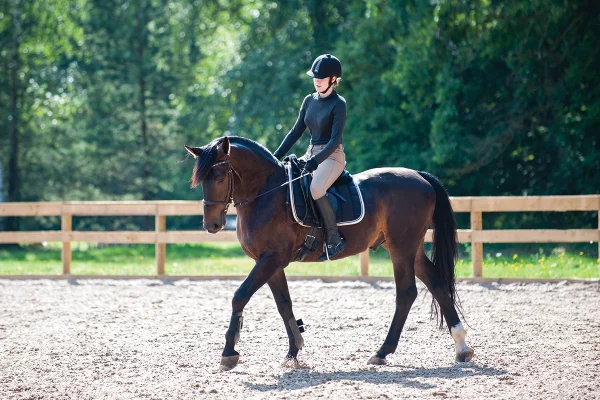
She often teaches riders how to fix this mistake.
“Riding from back to front is a lifelong endeavor and commitment,” Betsy says. “Your hands must be the last aid used. Energy must come from the hind end through the horse’s back to the contact with the bit.”
True impulsion, the goal in dressage, is not possible without a free-moving back.
“Longe lessons by a skilled seat instructor are productive when practicing,” she advises. “But not every instructor can teach this. I was lucky enough to have a talented trainer when I was young.”
Type of Horse for Dressage
When Betsy first started learning the basic elements of dressage, she was learning on a Half-Arabian purchased from an Amish auction. She says that the desire to learn is what’s most important, not the kind of horse you are riding.
“The hunger for the fundamentals of dressage [is most important],” she says. “Every horse can teach you, but you must be curious and open to learning. Finding the best trainer and program possible that fits your learning style and your horse’s needs is crucial to success.”
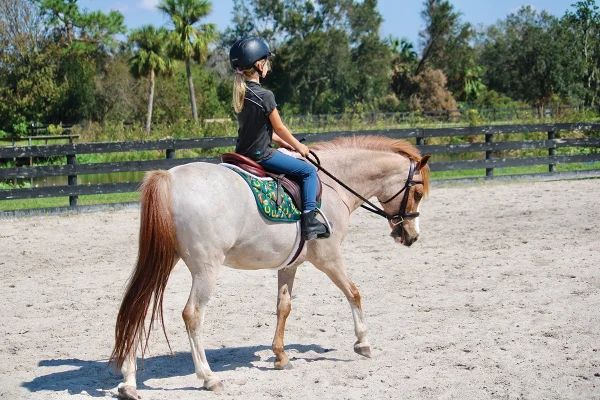
Once you learn the fundamentals, they will apply to any type of future riding you do.
“Good riding is good riding, and it doesn’t matter what tack you use,” Betsy says. “The horse must be [kindly] educated to have harmony with you to be at his top athletic ability. Good riders will always look for harmony over a quick fix in every discipline you ride. The fundamentals of dressage have always been about training the best riding horse, back then for the cavalry, and now for all riding horses.”
Memorization Tips
If find yourself really loving dressage, chances are you will want to show off your progress in the show ring, whether at a small local show or a bigger recognized competition, by riding a United States Dressage Federation test. These begin at Introductory level (walk/trot).
Learning a dressage test might seem intimidating if you’re not used to memorizing them. Betsy stresses the importance of having a routine to help with that.
“Everyone has their own way of retaining information,” she says. “Personally, I like the following methods. First, I physically walk on my own two feet through the pattern of the test while speaking aloud exactly what I will be doing in my test. I say out loud how I will prepare for each corner, half-halt before a transition, plan for my horse’s bend, energize my seat and calm my thoughts.
“As I’m falling asleep at night, I go through the test in my head again, spelling out exactly what I’m going to do and how I’m going to prepare for everything. Often, I will fall in and out of sleep having to familiarize myself with where I left off and how to begin again. This is very good practice for if you were to lose your way in the test.
“Next, tell the test to someone else. Stop the test midway through, and restart after a brief distraction.
“Finally, learn to associate. For instance, if you know that you are going to do two separate lines and both lines are headed to the judge, it helps you to remember what you’re doing and where you need to be.”
Dressage is the most technical of equestrian disciplines and requires both mental and physical strength to learn. With the countless benefits dressage offers, you’ll become a much more confident, balanced, engaged and patient rider.
The bond dressage gives you and your horse will be worth all the hard work and time you dedicate to it. Stay seated and good luck!
This article about dressage appeared in the January/February 2025 issue of Young Rider magazine. Click here to subscribe!

