


Can you transition into the lope without tensing your body and worrying? With the right coaching and cues that will help your horse know you want him to step into the three-beat gait, loping doesn’t have to cause concern.
Here, trainer and Interscholastic Equestrian Association (IEA) coach Ariel Hug shares her tips to help you transition to the lope with ease. Her student, Riley Morris, is riding Willow in these photos to demonstrate how to pick up the lope while sitting up straight and looking relaxed.
Ariel says her IEA students are judged on their lope transitions during rail classes and while riding through patterns. The judges want to see that riders can cue for the correct lope lead and can identify when they aren’t on the correct lead.
“Judges want to see that the horse is asked to pick up the lope nicely, and he isn’t spooked or jarred into the faster gait,” she says. “It’s OK to take your time. Don’t rush. Instead, listen for the announcement to pick up the lope and make sure your horse isn’t looking to the outside. Position your horse and yourself well and you’ll pick up the lope without trouble.”
Practice Time
Before you’re ready to lope in the show pen, make sure to practice your position and your cues in your home arena. After you’ve warmed up your horse at the walk and trot, it’s time to practice the lope.
Ariel says she wants her riders to be relaxed but have good posture for the transition. With your split reins, make sure you don’t have too much slack—you want just enough length to feel that you have a connection to the bit but without pulling.
“Pick your hand up and slightly to the inside so the horse picks up into the bridle,” Ariel says. “If you have a horse that’s younger, you may steer a little more to help the horse pick up more to the inside, lifting his inside shoulder. With your legs, reach your outside leg back and use more pressure than with your inside leg. That keeps the horse bent to the inside, so he’ll take the correct lead.”
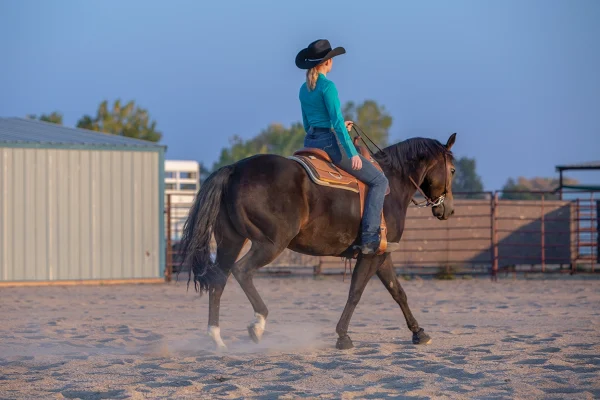
Ariel says if you’re having trouble getting your horse to pick up the lead you want, practice lots of sidepassing and turning on the forehand to make sure you can control his shoulders. If you’re having trouble telling if you’re on the correct lead, ask a friend to watch and tell you if you’re on the wrong lead. You’ll learn to feel when it’s right and when it’s wrong so that you can correct yourself.
In some IEA show classes, judges may ask you to pick up a lope from the trot instead of from the walk. What’s different? Your cue remains the same, but you may need to adjust your weight back over your pockets so your horse doesn’t think you’re cueing for an extended trot.
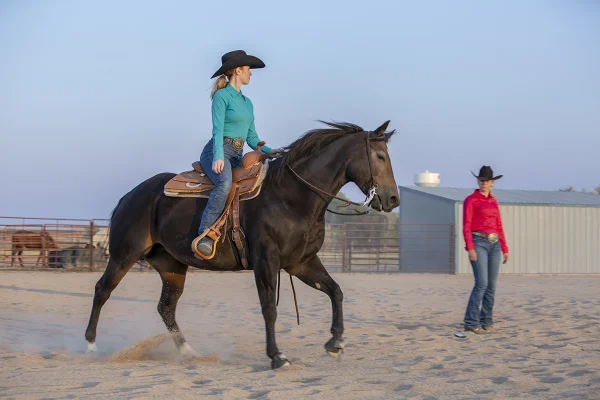
“A lot of the western horses at our shows are ranch riding horses,” Ariel says. “If you just cue with your outside leg, you may get a faster trot instead of a shift to the lope because these horses are often asked to do an extended trot. You need to pick up your reins to ask for a little collection and shift your weight back so the horse knows what you mean.”
In the Lope
Once your horse has transitioning into the lope, it’s important not to interfere with his forward motion. Keep your reining hand forward and ride with the rhythm of the lope to keep the horse going.
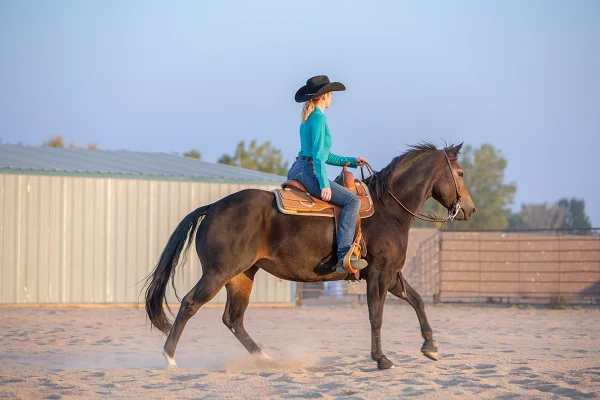
“Make sure not to pull the whole time, but keep some light contact,” Ariel says. “Keep riding so that the horse has a rhythm. Move with the horse, counting one, two, three to keep the horse in his strides. If you’re riding a slower horse, it’s easy to for him to break gait. Make sure not to grip with your legs; keep your legs moving with the horse and add some pressure to bump him along. Make sure you don’t tense your upper body, or you’ll have the ‘pumping’ look.”
Troubleshooting
If you’re having trouble picking up the lope, Ariel advises steering into a corner to help the horse pick up the correct lead and position him well for the new gait. Riding into the corner to pick up the lope can give you more confidence that your position is correct to get the correct lead, too.
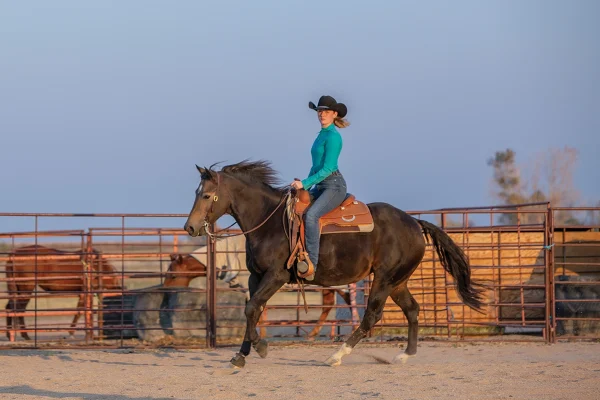
If you pick up the wrong lead, make sure to stop and correct it. A judge will always give extra points for good horsemanship and knowing what needs to be fixed.
If you’re worried about the faster-paced gait, ask your coach if you can lope on the longeline to get the feel and rhythm of the lope without worrying about the control of the horse. Loping on the longeline is fun and can help you sit down and relax, learning to feel the gait and get used to the swinging motion.
Ariel says riding a fast and bumpy trot is actually scarier than stepping into the lope. Work on your extended trot and get comfortable with moving faster. If you can trot at a faster pace, soon you’ll want to step into the lope, and the smoother gait will be a relief.
“Keep breathing,” she adds. “I ask my students questions as they’re going into the lope so they don’t think too much. If you’re talking, you won’t be thinking too much about going fast and you’ll just do what you need to do to step into the lope. Trust your program and your horse, and just keep breathing!”
This article about the transition into the lope appeared in the March/April 2025 issue of Young Rider magazine. Click here to subscribe!

