


You know a horse’s pedigree, or written record of his ancestors, is important. But looking at that paper—all those names!—can feel a little overwhelming at first. However, with a little knowledge of how to read a horse’s pedigree, you can learn a ton about a horse based on who his ancestors were and any noteworthy accomplishments they achieved.
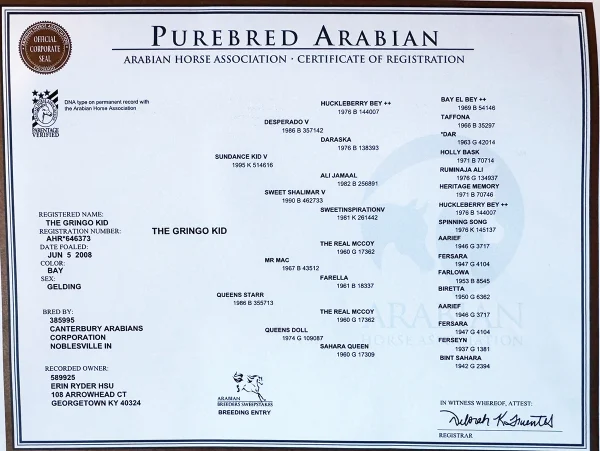
Regardless of the breed, the basics of pedigrees are the same. Pedigrees have a lot of names and numbers and may look confusing at first, but it’s a lot like your family tree. It starts with your horse and then branches out to show your horse’s sire (father) and dam (mother), grandsire and granddam, great-grandsire and great-granddam, and so on.
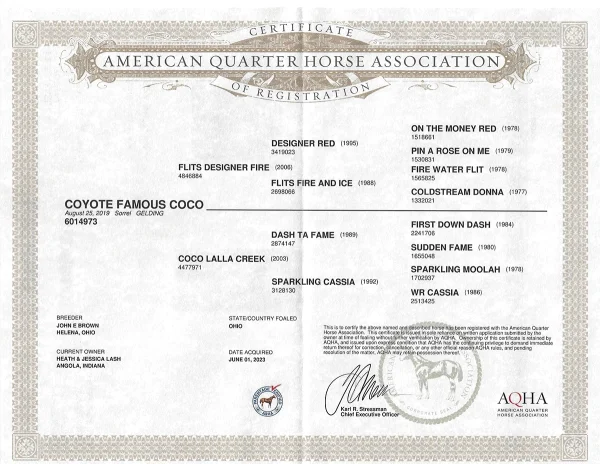
But a pedigree can give you a lot of other information about your horse, too. If the pedigree is part of your horse’s registration certificate, it may also have information about your horse’s breeder, other previous owners, coat color, foaling color (if different), and markings, and it may include many registration numbers for your horse and his ancestors.
Almost any registered horse name can be entered at AllBreedPedigree.com to get a five-cross pedigree and lead to lots of fun research. For Thoroughbreds, PedigreeQuery.com or Equineline.com will have this information.
The Basics of a Pedigree
Let’s start by looking first at the pedigree itself—that family tree of names. The first name, on the left side, by itself, is your horse. That’s easy, right?
Now let’s move to the right on the pedigree. The next two names are your horse’s sire and dam. The sire will be the upper name, and the dam’s name will be below. The pedigree may include their registration numbers, year of birth, and coat colors.
Continuing to the right on the pedigree, your horse also has four grandparents—a set of parents each for the sire and the dam. These form the next column of names to the right. Again, each pair has the sire on top and the dam below.
The next column has eight names because your horse has four sets of great-grandparents. The next column has 16 names and eight sets of great-great-grandparents, and the numbers keep doubling from there. You can keep tracing back from generation to generation. Many printed pedigrees contain three to five generations.
A pedigree looks like an important piece of paper, and it is. It tells you a lot about your horse! And who knows? You may even discover that your horse is a descendant of a famous horse, like Secretariat!
TIP: Be sure you keep your horse’s pedigree in a safe place, especially if it’s his registration certificate.
Top Questions
1. Why are some of the names the same?
When you look at pedigrees (especially extended pedigrees), it’s not unusual to come across the same name more than once. This is particularly true in when there are influential or famous stallions in a breed. Because these stallions are in the pedigrees of so many horses, it’s common for more than one of your horse’s ancestors to descend from that stallion. That’s one reason why you might see the name more than once in the same pedigree.
2. Why doesn’t my horse have a pedigree?
Unregistered or “grade” horses may not have a written pedigree because their parentage is unknown. However, many registries and breed associations offer a special type of registration for horses that have one registered parent or grandparent. In this case, you may receive a partial pedigree that includes the names of known horses in your horse’s background.
3. Why do you need a pedigree?
It’s helpful to know as much as possible about your horse, and a pedigree is a great source of valuable information about your horse’s ancestors. By learning about the animals in your horse’s family tree, you might discover that he comes from a line of talented dressage horses, or horses that are noted for having excellent conformation, or horses that have rare or desirable bloodlines.
4. What are the symbols and letters next to the names of some horses on the pedigree?
Some registries and breed associations present lifetime awards to horses that have demonstrated great success in a particular area.
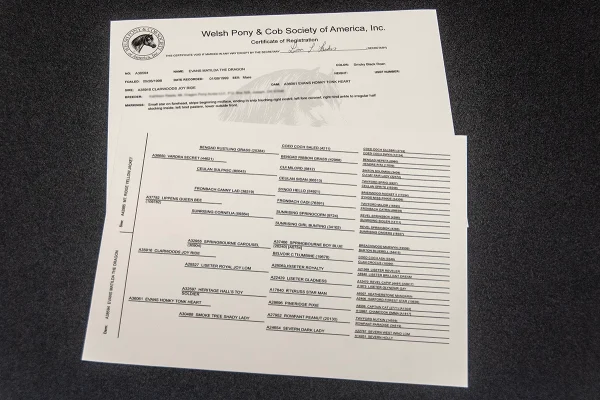
For example, the American Quarter Horse Association awards Registers of Merit that are abbreviated “ROM.” The Welsh Pony and Cob Society of America awards Legion of Merit awards (LOM), so if you see LOM after a pony’s name on a Welsh pedigree, you’ll know that pony earned a Legion of Merit award.
A symbol like (*) next to a horse’s name can indicate that the horse was imported from a different country. In Arabians, symbols like (+) and (/) can indicate various types of merit awards from the Arabian Horse Association.
This article about how to read a horse’s pedigree appeared in the March/April 2025 issue of Young Rider magazine. Click here to subscribe!

