


Winter can be a boring time for horse lovers. For some, it really limits how much time you can get in the saddle, and you can only brush your horse so much. So, how can you make your barn time and groundwork fun, fresh and worthwhile? Trick training your horse, of course!
Try Trick Training
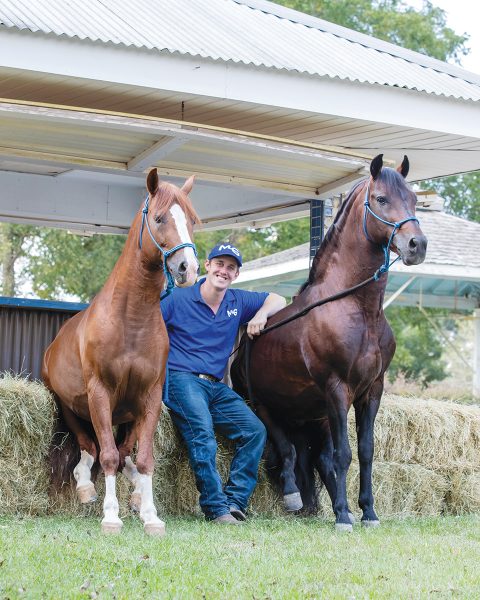
For Michael Gascon, a horse trainer based in Mississippi (also known as “The Horse Guru”), teaching horses different behaviors, or tricks, is the best way to build the relationship between rider and horse. For younger riders, it’s a great way to learn patience and how you and your horse can learn to read each other. Here, he will share two tricks you can teach your horse to do this winter.
Keep in mind a few things:
◆ Have an adult near to watch and help if needed.
◆ Keep small treats handy to give as a reward.
◆ Have patience!
Trick #1: Smiling Pretty
Ever wonder how horses on TV smile at the camera? Here’s your chance to teach your horse or pony to “smile pretty!”
For your safety, start with your horse standing tied to something sturdy. Remember to have a small bag of treats nearby, maybe in a fanny pack around your waist, to use for rewards.
“I like small treats like alfalfa pellets, so they’re easy to eat and for you to hold in your hand,” Michael advises.
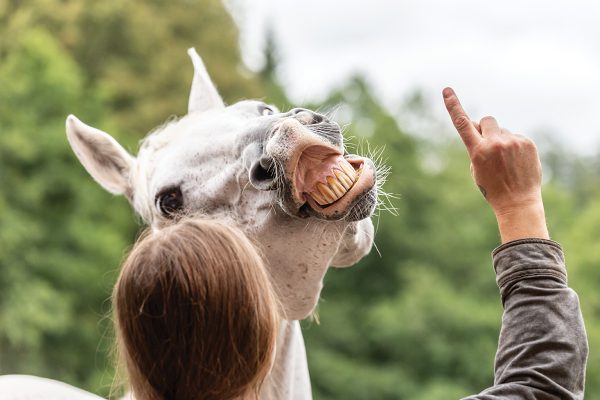
The end goal of this trick is that you will stand to the front of your horse, hold your index finger in the air, and tell him “smile”—and he’ll lift his upper lip.
1. The first step of this trick is to get your horse to look up. Take your index finger and place it at the front of his nose and rub your finger up from his lower nose to the top of his muzzle into the air.
It may take a while for him to figure out what you’re doing, but once he moves that upper lip, reward him by saying “good boy!” and giving a small treat.
2. Repeat the process of rubbing up on his lip.
If that doesn’t work, bring your fingers back down to his mouth, but make him work for the treat by reaching. The moment you see him lift his lip and you see his teeth or gums, give him a treat and give verbal praise.
“I need to see some action before I can reward him,” Michael says.
3. The cue will be with your finger in the air. At first, your horse won’t know what that cue means, but with repetition, using your index finger to stroke from his lips upward and rewarding, he’ll start to connect the two.
4. To connect the two, start to rub his lips up and then show your finger in the air. Cue, stroke, cue, then reward when you see his gums.
5. Repeat this process until you start to see him automatically lift his upper lip when you raise your finger. Don’t forget to reward!
Michael stresses the importance of having patience with your horse because each one learns differently.
“The first time you try with some horses, they’ll do anything for that cookie,” he says. “Others, it’s going to take a little more work. Training is just repetition.
“I like to keep my trick training to five minutes, once a day,” Michael continues. “This isn’t something you want to drill. You’ll be amazed after two or three days. Don’t work the ‘try’ out of them, and always end on a good note.”
Trick #2: Take a Bow
Teaching your horse to bow is the perfect introduction to teaching your horse to lay down on cue. This is a little more advanced, so you’ll definitely want some help, as well as some treats, a rope halter with lead, and a short liberty whip.
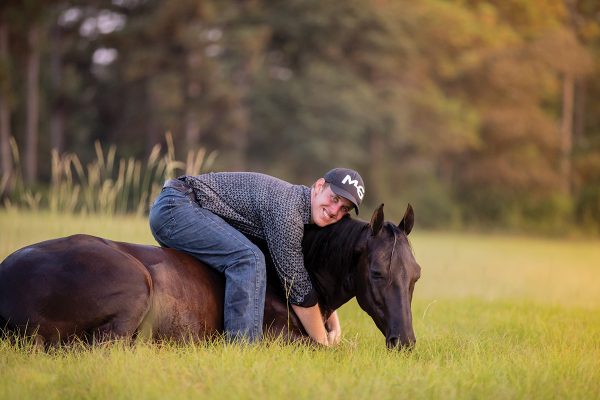
“This is best to do after you’ve worked your horse or he’s a little tired,” Michael says. “Also, make sure you do this on a soft surface, like the arena.”
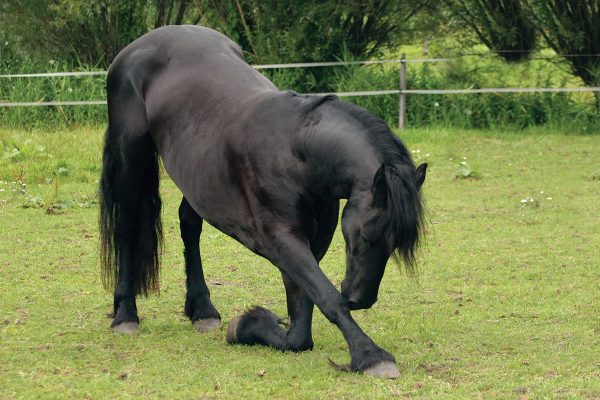
Your first goal is to get your horse to drop his head.
1. Slowly squat down and lightly pull down on the lead to lower his head. As soon as your horse lowers his head to the ground, stand up and walk forward. Repeat this a few times.
2. Once you have your horse dropping his head easily, you’ll want to put a cue with it. You will use your liberty whip as the cue. Stop and face your horse a little to the right side of the shoulder, squat down and lightly tap him on the lower right side of his belly while also lightly pulling his head down. The moment he drops his head, release the pressure and pause.
Goal: You want to see the horse respond to the tapping by dropping his head and holding it there on his own.
Your second goal is to see the horse pick up his leg with his head down.
1. While you’re squatting down and the horse’s head is down, lightly tap his front leg and release when he picks up his hoof.
2. Staying in one spot, repeat this a few times, then stand up and move forward.
“We like to see the horse willingly lower his head and raise his leg with a light tap,” Michael says.
It may take three to four days of working with the horse for five to 10 minutes a day.
The third goal is when your horse lowers his head and lifts his leg, his other front leg buckles a little as the horse stretches his head further back, much like a “bow.” This is the natural movement when a horse goes to lay down.
1. Ask your horse to drop his head and pick up his foot.
2. While he has one leg up, tap the other front leg.
Stay to the right side of his shoulders to give him some space and keep him comfortable.
3. Once you see the horse start to buckle like he’s going to lay down, release.
Patience and Reward
Always remember to have patience and reward your horse throughout the process of learning new things. Watch the videos and read the steps a few times so you have a better understanding of what to do before trying them on your horse. But, most importantly when trick training, have fun and enjoy spending time with your horse!
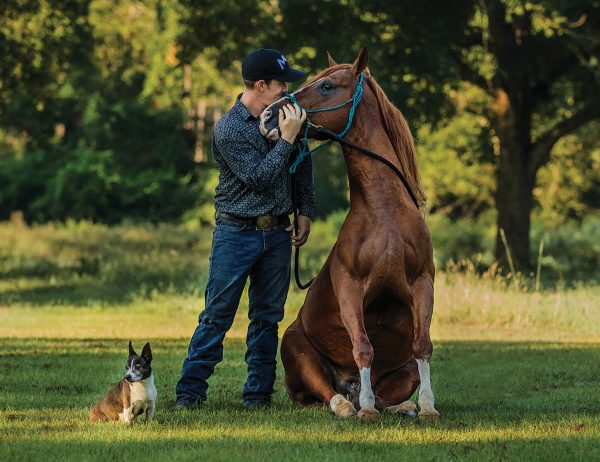
Join Michael Gascon and learn more tricks you can teach your horse at The Horse Guru’s website with links to free videos and workbooks, exclusive to Young Rider readers here!
This article about trick training your horse appeared in the November/December 2024 issue of Young Rider magazine. Click here to subscribe!

