


You’ve probably heard from your trainer or other experienced riders how important good saddle fit is for horses. A tweak or rub can make for a sore back and muscles, even to the point of creating lameness in the horse. Since we all want our horses to feel their best so they can be happy partners performing at their best, it’s important to learn the basics of good saddle fit.
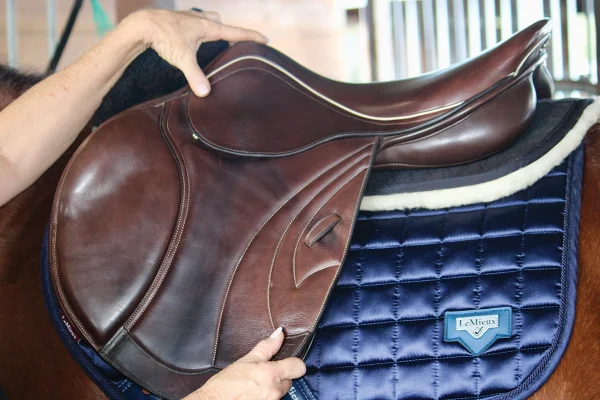
Through her work, certified saddle fitter Sherry Seals not only fits saddles, but also educates equine professionals like veterinarians and chiropractors. This emphasizes the critical role of saddle fit in a horse’s health and performance.
“The primary function of a saddle is to distribute the forces of carrying a rider across the horse’s body, preventing discomfort or injury,” she says. “The secondary function is to position the rider for safety, support, and discipline-specific effectiveness. This is why there are so many types of saddles.”
To help riders make sure their saddles are working correctly, Sherry has developed a guide that includes key facts, behavioral and physical checklists, insightful questions, and common riding concerns.
Key Facts
1. Horses can carry riders best when the saddle evenly distributes weight across strong back muscles and the skeletal structure, avoiding pressure points and allowing freedom of movement.
2. Horses are honest animals. Regularly monitoring your horse’s reaction to saddling is essential. Their reactions to saddling can show signs of anxiety, ranging from pawing or tail swishing to biting and rearing. Looking for these behaviors offers valuable insight into their comfort levels and saddle fit issues.
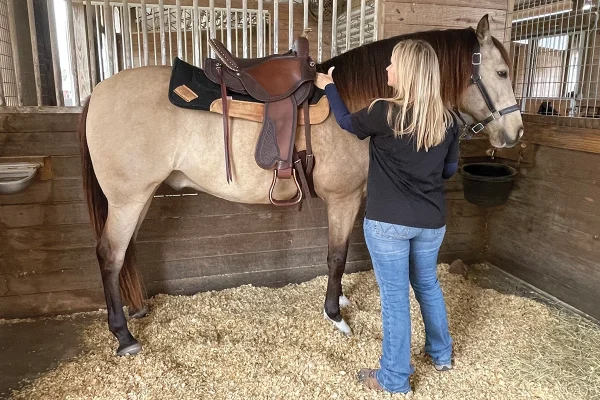
Saddle Fit Checklist
1. Inspect the Saddle Area: Check for soreness or rubs where the saddle and girth/cinch rest. Extra pressure often shows itself with visible signs of discomfort.
2. Check for Back Sensitivity: Run your hand gently along the horse’s back. Does he flinch or try to move away? These could be signs of soreness.
3. Look for Hair Changes: White hairs, balding patches, or broken hair near the saddle or girth/cinch area often mean pressure points or friction.
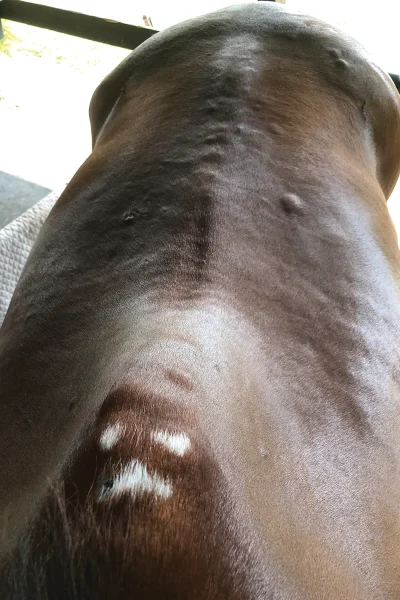
4. Spot Coat Swirls: Check for swirls or broken hair under the saddle and pad, particularly in the lower back area. This could indicate saddle pad issues or saddle instability.
5. Examine Hair Thickness: From a mounting block, look for areas of thinner hair, which might suggest uneven saddle movement, friction, or pressure.
6. Check Sweat Marks: While not always reliable, uneven sweat marks or dry patches can hint at fit problems.
7. Feel for Skin Bumps: Hard bumps, known as folliculitis, indicate excessive saddle pressure or movement.
8. Swelling or Muscle Loss: Call a veterinarian or qualified fitter if you notice swelling or muscle loss, as these are major signs of poor fit.
Questions to Ask
1. Is the pad right for the fit? Like socks in shoes, a saddle pad must complement the saddle for best comfort and fit.
2. Is the saddle properly positioned? The saddle tree, typically made of wood or carbon fiber, should sit behind the horse’s shoulder blade, not on top of it.
3. Is the girth/cinch the correct length? A girth/cinch that’s too loose can cause saddle instability, while one that’s overtightened can put harmful pressure on the spine, rib cage, and soft tissues and cause soreness and lameness.
Common Saddle Fit Problems
◆ Balance Issues: The saddle’s balance significantly affects its function. If the saddle collapses in the front, it compresses the wither region, pushing you into an unstable riding position. On the other hand, a seat, where your legs are too far forward and your weight is not well-distributed.
◆ Excessive Movement: Too much cantle movement may stem from an ill-fitting tree, incorrect rigging, or the wrong padding. To fix these issues, you’ll need an in-depth assessment of both saddle and horse.
◆ Sliding Saddles: A saddle that slides forward, backward, or sideways is a clear sign of poor fit. Such movement not only hurts the horse, but also inhibits movement and freedom, potentially leading to pain and long-term injury.
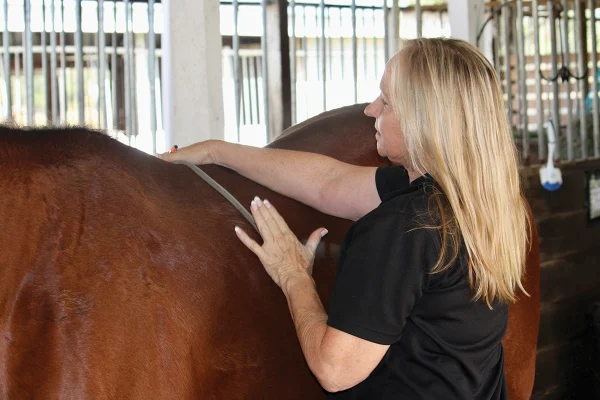
Consequences
The consequences of poor saddle fit are far-reaching, affecting not just performance but also the horse’s long-term health. A poorly fitted saddle can cause:
◆ Permanent damage to the spine and soft tissues.
◆ Muscle trauma, scarring, and nerve damage.
◆ Emotional anxiety and behavior issues.
◆ Secondary problems, like digestive issues and arthritis.
Sherry emphasizes that these issues aren’t just about improving performance, but the horse’s wellbeing.
“Imagine a piece of gear or clothing causing permanent damage to your neck or back, arthritis, lameness, muscle trauma, scarring, anxiety, nerve damage, unusual behaviors and secondary digestive issues,” she says. “The same applies to your horse. Sometimes unknown lameness can be explained by fitting problems. It’s not always hoof or leg injuries that can make horses appear to be in pain.”
Take Action Today
Sherry says that saddle fit is not a one-time thing, but an ongoing process that changes with your horse’s age, condition, and workload.
By following her guidelines and getting help from a qualified fitter, you can prevent discomfort and ensure a happy partnership with your horse.
| Meet the Expert Sherry Seals is a distinguished saddle fitter certified by the Society of Master Saddlers in the United Kingdom. Her qualifications place her among an elite group of only 600 certified members worldwide, representing 15 countries. To earn this title, Seals had to study the anatomy and biomechanics of both horse and rider that lead to a smooth partnership. Her expertise spans nearly two decades and covers both English and western saddles. She is the founder of Precision Saddlery and Bodywork based in Venice, Fla. |
This article about saddle fit appeared in the March/April 2025 issue of Young Rider magazine. Click here to subscribe!

