


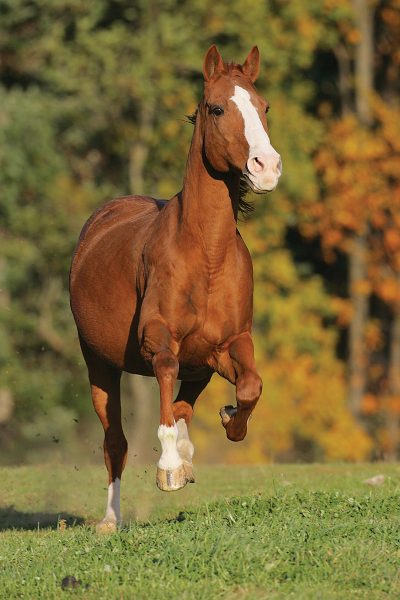
When we think of Thoroughbreds, we think of sleek, athletic horses coming around the far turn at the end of a fast-paced race, each striving to be the first one to cross the finish line. These beautiful horses fill us with inspiration and admiration, and it’s easy to see why the Thoroughbred has captured hearts all around the world for hundreds of years. The breed has a long history and a very bright future.
A Horse for Racing
The Thoroughbred was developed in England around the end of the 1600s, and the hope was to create a breed of racehorse that had strength, stamina, and speed. The three initial foundation stallions were actually Arabians: the Darley Arabian, the Godolphin Arabian, and the Byerly Turk. The first Thoroughbreds arrived in America in the early 1700s, but horse racing had already been taking place in the United States for decades prior to that.
The Jockey Club, which maintains the American Stud Book of Thoroughbred horses, was established in America in 1894. According to data from The Jockey Club, nearly 650,000 Thoroughbreds were registered during the period spanning 1998-2022, and about 17,000 Thoroughbreds were born in the U.S. in 2023.
After the Track
There’s no doubt that those early breeders achieved their vision—the Thoroughbred has certainly excelled as a racehorse all over the world. The Kentucky Derby just celebrated its 150th running, and Thoroughbred racing in America is still a popular attraction.
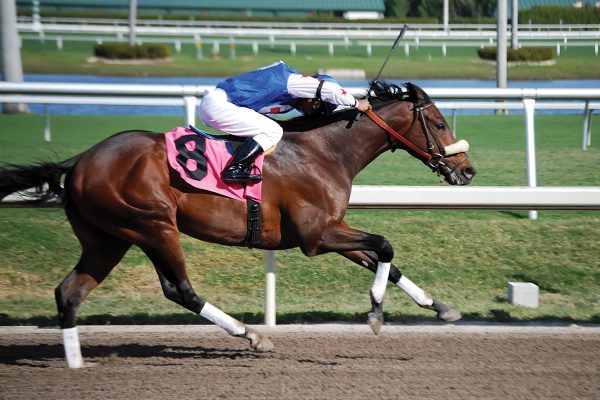
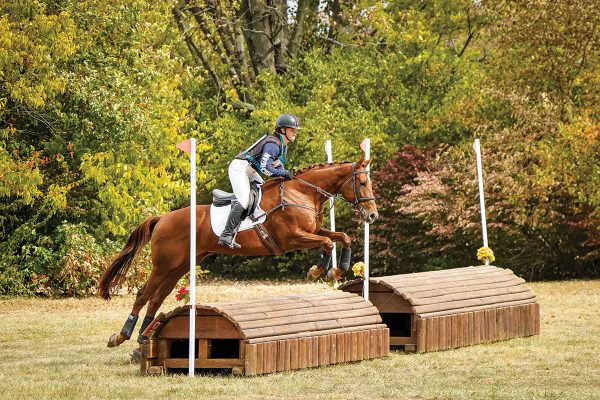
Since even the most successful racehorses retire when they are around 4 to 7 years old, they still have many more years of useful riding and companionship to give. Their athleticism, stamina, and trainability means that they excel in many other equestrian disciplines! These include dressage, eventing, hunters, jumpers, and many more.
And that’s where the Retired Racehorse Project (RRP) comes in.
Retired Racehorse Project
The RRP is a 501(c)3 charitable organization that seeks to help place Thoroughbred ex-racehorses in second careers.
“Horses can live anywhere from 20 to 30 years, but most racehorses are retiring from racing around age 5 or 6, if not even younger,” says Kristen Kovatch Bentley, Communications Manager at the RRP. “That’s another 15 to 20 years that those horses will need another career that’s not as strenuous as racing. Fortunately, the Thoroughbred is a versatile, trainable, and athletic breed of horse that can be retrained to do just about any riding sport.”
As former racehorses adapt to their second careers, it opens up many opportunities for these horses to thrive in the show ring, in lesson programs, as trail horses, and as companions.
The Thoroughbred Makeover and National Symposium takes place every October at the Kentucky Horse Park in Lexington, Ky., to encourage trainers to retrain Thoroughbreds for second careers.
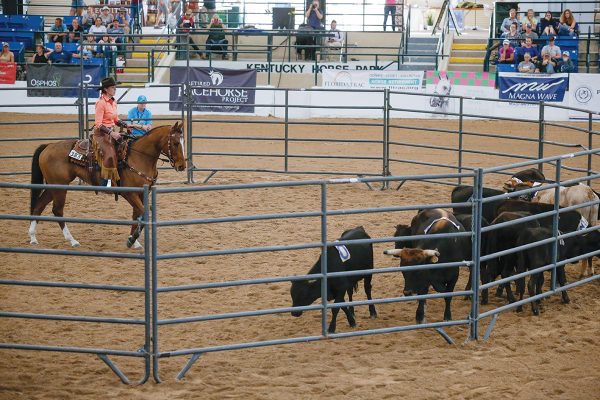
The event offers $100,000 in prize money, with the following divisions currently offered: barrel racing, ranch work, competitive trail, dressage, eventing, show jumping, field hunter, show hunter, polo, and freestyle. Discipline winners are named in each division, and then an overall Thoroughbred Makeover Champion is crowned at the end after the winners are scored head-to-head in a finale performance.
Youth Participation
And there’s good news for young riders: juniors can participate!
“Junior competitors can compete alongside the professionals and adult amateurs at the Thoroughbred Makeover, and they’ve even trained past winners of the overall title of Thoroughbred Makeover Champion,” says Kovatch Bentley. “Juniors can also compete as part of a team entry [of one horse] with their trainer or coach, a family member, or fellow riders from the same barn.”
She adds that junior competitors can get involved as early as age 12, and that all competitors are encouraged to work with professional trainers or coaches.
The Thoroughbred Makeover and National Symposium is also a fantastic learning opportunity. You’ll find educational seminars, hands-on demonstrations, and a vendor fair that’s perfect for anyone who loves shopping.
“The Makeover Marketplace runs throughout the week, so horse shoppers or adopters can watch horses compete and take trial rides right at the Kentucky Horse Park on Thoroughbreds offered for sale,” says Kovatch Bentley. “Juniors are welcome as volunteers too, which allows them to see everything the event has to offer close up, while also giving back to the community.”
If you love the idea of helping to retrain a retired racehorse and want to help give a Thoroughbred a chance at a second career, visit the RRP website at www.therrp.org and click on “Volunteer.” Have fun!
Thoroughbred Fast Facts
◆ The ideal size for Thoroughbreds is 15.2 to 17 hands tall.
◆ Most Thoroughbreds are bay or brown, but blacks, chestnuts, and grays are also seen.
y Thirteen horses have won the Triple Crown in America, which means they won the Kentucky Derby, the Preakness Stakes, and the Belmont Stakes. The first winner was Sir Barton in 1919, and the most recent winner was Justify in 2018.
◆ According to the Guinness Book of World Records, the record for the oldest Thoroughbred horse belongs to a chestnut gelding from Australia named Tango Duke, who lived to be 42 years old (1935-1978).
◆ Triple Crown winner Secretariat still holds the records for the fastest times ever recorded in the Kentucky Derby and the Belmont Stakes.
This article about the Thoroughbred appeared in the September/October 2024 issue of Young Rider magazine. Click here to subscribe!

