


The turnaround skill is needed for Interscholastic Equestrian Association (IEA) classes, such as ranch riding, horsemanship, and reining. In ranch riding and reining, elevating those turnarounds to spins requires a little extra learning on how to achieve them.
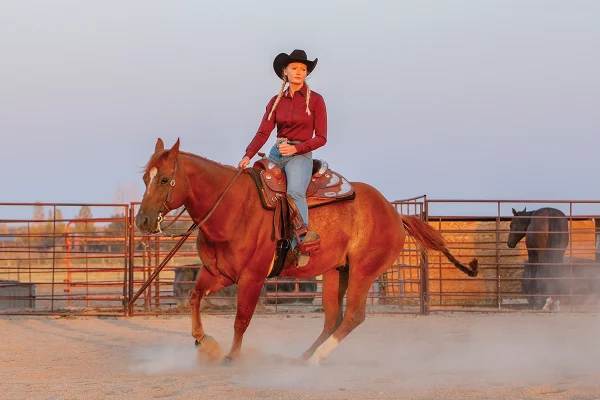
Will your horse turn around easily, completing a 180-degree turn to the opposite direction, or completing multiple spins in a row? If your horse knows how to spin but you’d like to master the skill and cue with confidence, IEA coach Ariel Hug can help.
“The cue to turn around just a little or to complete full spins is the same,” Ariel says. “Even if you’re not showing a reining horse or showing in a reining class, you’ll need to turn for pattern classes. The cue is the same, but the number of times you’ll go around varies. In a horsemanship pattern, you may turn with just a little pressure to face to the side. While you won’t be as assertive as when asking for a reining turnaround, the cues are all the same.”
Starting Position
To start any turn, Ariel says to look to the direction you want to go, point your reins into the turning direction and “open the door” with your legs. With your leg aids, you’ll remove pressure to create a pathway for the horse in the direction you want to turn.
Then apply pressure with your outside leg to push the horse into the opening you created. Follow up your body cues with your voice. Cluck or kiss to get your horse to move his front legs across and into the turn.
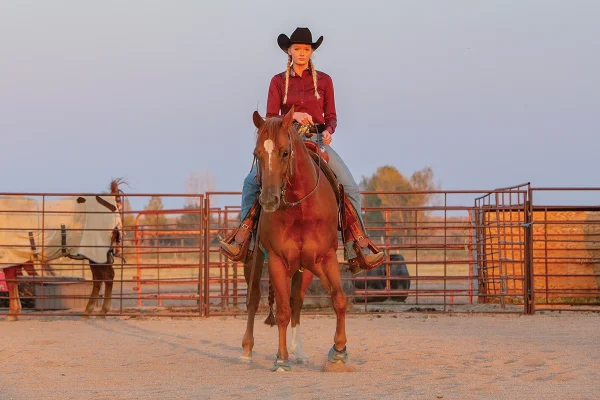
For an IEA reining pattern, Ariel says you’ll be asked to complete three to four turns. To keep your turn going without hesitation, keep looking in the direction you want to go and keep your inside leg off the horse’s side. You don’t want to cue or cluck for each step of the turnaround. Instead, the horse should follow your request to turn until you change your cues to show him it’s time to stop.
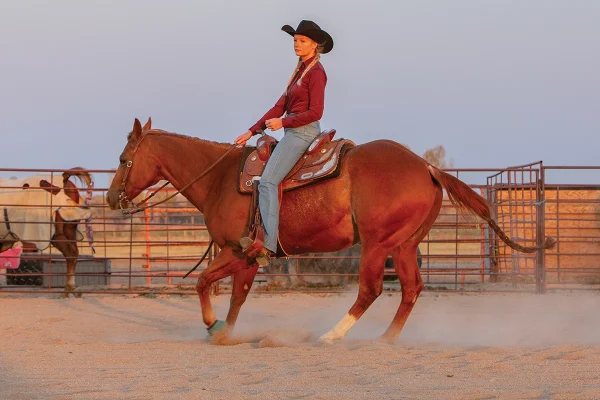
Some horses will turn and keep turning with just a look to the side and a cluck. Other horses may need more or less leg pressure to turn at the speed you want.
For IEA shows, riders draw then ride a horse they may not have ridden before. Ariel says you’ll need to practice before the show on multiple horses to find out how to ride horses with different turning cues. If you’re prepping your own horse for shows, you can practice at home to find the perfect amount of pressure to keep your horse in the turnaround.
“Some horses like to have outside leg pressure on all the time,” Ariel says. “Most of the reining horses shouldn’t need constant pressure. It’s a good idea to ask the horse’s handler about his cues and preferences before you go into the arena. For any horse, your hand is like the steering wheel and your foot is the gas.”
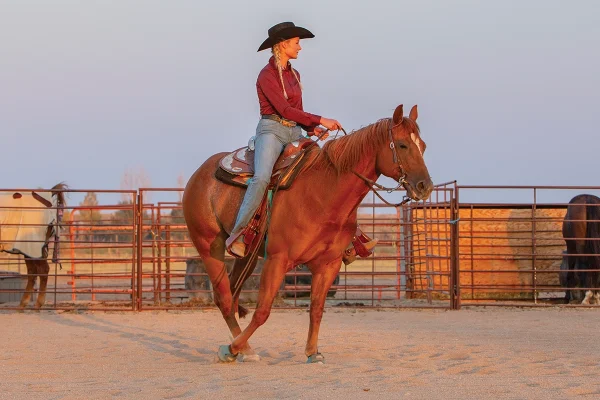
Stopping the Turn
When it’s time to end your turnaround, sit deep in the saddle, say “whoa,” move your hand back to center (moving only 2 to 3 inches from your turn position back toward the saddle horn), and move your legs back to relaxed at the horse’s side.
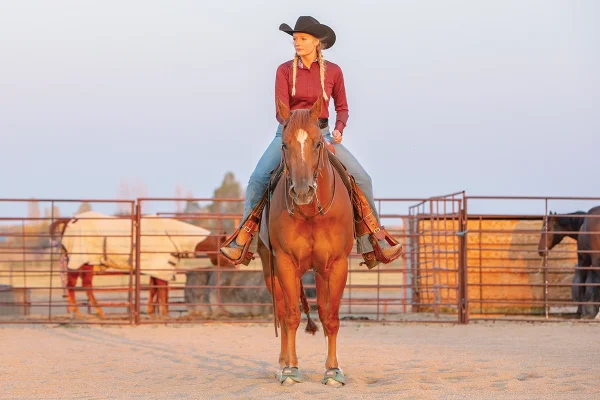
Ariel says knowing when and where to give the stop cue can be confusing at first. If you need to make a specific number of turns, you’ll need to plan ahead for how to stop while facing in the correct direction.
“Usually, you’re asked to stop and start facing in the same direction,” she says. “One step before you want to stop, give your horse the cue to whoa.”
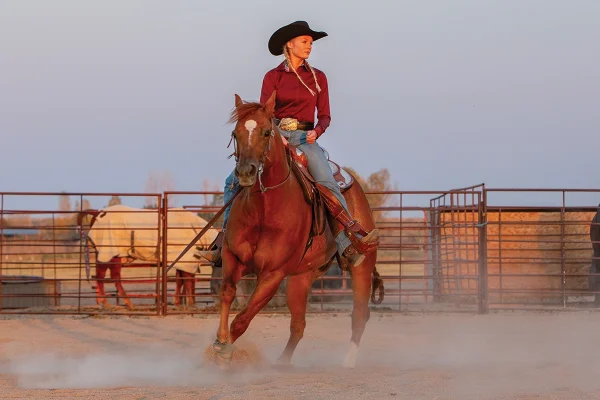
To find the right place to stop, notice where you start. Find something to anchor your sights on each time you go around. In a show arena, you may be facing the judges. Count your turn each time you see the judge’s stand or something bright and noticeable that you’ll look for to “spot” each turn.
For reining patterns, you’ll need to know where to stop but also when. Ariel teaches her students to count their turnarounds by saying the number to themselves each time they pass the starting point.
If you need to do three turnarounds, count “one, two, whoa.” If you need to do four turnarounds, count “one, two, three, whoa.” Ariel says if you allow yourself to count the last number, you’ll pass where you need to stop.
Judging Standards
What is that definition of correctness for a turnaround? Ariel says judges want to see that you turn around with cadence and equal crossover steps, and the horse is willingly guided.
“You’ll score well as long as you’re continuing to turn and staying in the same general spot as where you started,” Ariel says. “Most horses can’t hold a pivot foot and move quickly in a turnaround, but a judge doesn’t want to see you travel far to the right or left of where you started.”
Keep in mind that the turnaround is based on forward motion.
“Sometimes students get in their minds that they need to shift their weight back before turning,” she says. “While the horse’s weight needs to be rocked onto his hindquarters to free up his shoulders for movement, he shouldn’t be stepping back.”
Master the Move
Ariel says she has her newer students practice the turnarounds on each ride to make sure they know the cues. If the horse knows how to turn and the rider knows how to ask correctly, turnarounds aren’t something to keep drilling.
“My older students practice turnarounds once a week,” Ariel says. “That’s it. You don’t want to over-practice with the horse if it’s the rider who needs to practice. You can visualize how to start and stop without repeating the turns too much.”
When you’re practicing, turn in one direction and notice your starting and stopping position so you can adjust your cues the next time you practice. Make sure to turn in one direction, hesitate, and then turn the opposite way to keep your horse balanced.
This article about how to ride reining spins appeared in the November/December 2025 issue of Young Rider magazine. Click here to subscribe!

