


Being part of a team-based riding organization can be an amazing way for young riders who don’t own a horse to jump into the world of equestrian competition. Members of organizations such as the Interscholastic Equestrian Association (IEA) and its western-only counterpart, YEDA (Youth Equestrian Development Association), don’t ride horses they own at the team’s shows. Instead, they’re paired at random with a mount suitable for their experience level from a group of horses provided for use by the show. Climbing on a horse you’ve never ridden right before you walk through the in-gate may sound a little scary. However, riding these “draw horses” can help you become a more confident rider who knows how to calmly work through anything that a horse throws your way.
Watch the Warmup
At YEDA horse shows, riders aren’t given a chance to ride their draw horse before they go into the ring. However, they do have the opportunity to watch the horses being warmed up by another rider. This is a valuable time to look for clues on how to get the best ride possible on their mount.
Carrie Brigham, who just wrapped up her final season as a YEDA exhibitor, explains what she looks for in her draw horse when she’s watching the warmup.
“I try to analyze how the rider is schooling him,” she says. “How they’re riding him, whether they ride with loose or tight contact, how much leg they’re using, things like that.”
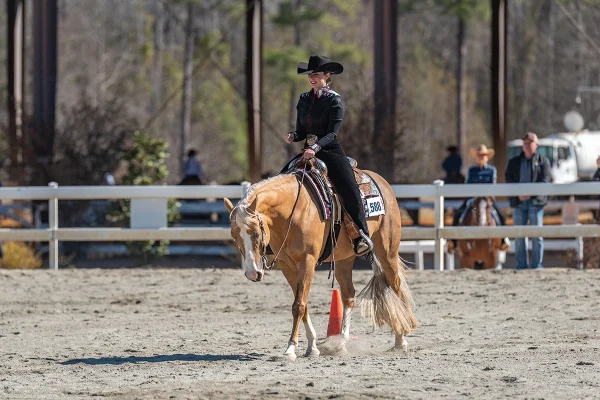
Former IEA rider Jenna Woody also tries to identify any quirks her draw may have prior to her go, noting that doing so helps her know how to work through those things so her ride has the smoothest look possible.
Alexis Daugird, a rising senior on the University of South Carolina Equestrian Team, says that observing the horse’s temperament is a key part of her pre-ride routine.
“The first thing I try to figure out is that horse’s mindset on that day,” she says. “I try to determine if I’m going to be able to really push this horse, or if he’s maybe a little hot and may explode if I push too hard.”
After gauging the horse’s temperament, Alexis takes a look at each horse’s strengths and weaknesses.
“Once we know how the horse is probably going to act, we figure out what he has the ability to do well,” she says. “Maybe he’s a beautiful lead changer but can’t turn to save his life. In that case, I may say, ‘OK, we’re just going to get through this turn the best we can and then go plus that lead change by throwing in a flying change instead of a simple.’”
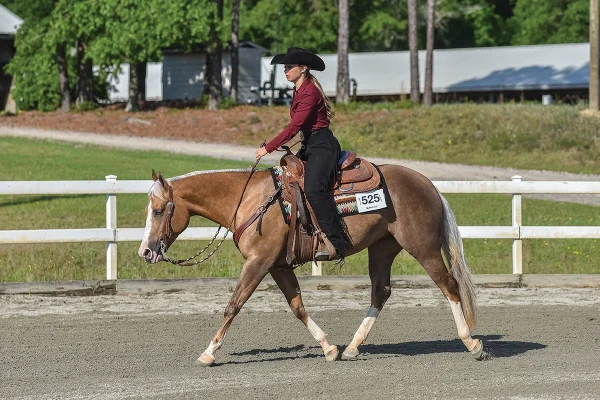
Your coach is also a great source of information on how to get the best ride possible out of the horse you’ve drawn.
“At YEDA shows, there’s a horse description list that includes things like heavy outside leg, watch for lead changes in the corner, might swap leads—things like that,” says Emily Caskey, a volunteer who assists with Joy McMillon’s Columbia, South Carolina based YEDA team.
“It’s important for riders to use these descriptions because they can be disqualified for things like riding a horse that was a one-handed-only option with two hands,” she adds.
Shine in the Ring
Once you’re in the saddle, there are a couple steps you can take to quickly get a feel for your horse. Carrie and Jenna both like to apply leg and rein pressure as soon as they step on their mounts to see what kind of frame the horse can get into, and how much of each cue they must apply to get the horse there.
“The first thing I want to do is put my legs on him and see how he responds,” Alexis says. “Is the horse going to run away from my legs, or does he give to them really well? Once I know that, I can move on from there.”
You may be wondering what happens if your horse isn’t performing as you hoped during your class or pattern. The good news is that moments like this are an awesome way to show off your problem-solving and horsemanship skills to the judges!
“You can help cover up and get through a rough patch by smiling, using more of your lower body aids rather than going straight to your hands, and just continuing on,” Alexis suggests.
Going with the flow and working to resolve the issue at hand doesn’t go unnoticed by judges. Emily points out that if a horse is fighting you in a movement, but you continue to apply the correct cues, your score may not be as negatively impacted as you expected.
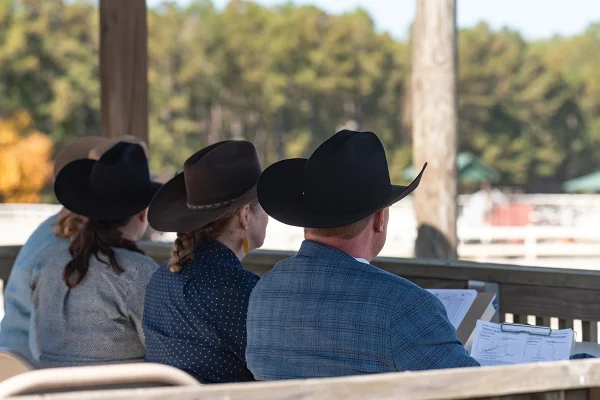
YEDA Coach Kate McAlinn says that the most common mistake she sees riders make is over-riding.
“They try to anticipate instead of feeling what’s happening in the moment,” she says. “Once riders relax and start working toward feeling, the draw format comes easier for them.”
Maintain Your Mindset
Maintaining your confidence is key when riding draw horses. Here are a few of our riders’ favorite tips on how they keep their minds fresh for show-ring success.
◆ Trust yourself and know you’ve done your homework.
“Before I go into the pen, I’m sometimes jittery or overthinking things,” Carrie says. “But most of the time as soon as I go in, that all goes away. I’ve gathered enough information up until that point that I’m able to confidently ride the horse.”
◆ Learn from the “bad” rides.
“Our bad rides that we can’t turn around are super important,” Jenna explains. “It doesn’t matter if you
fell off or grabbed the horn. It
matters that you are stronger because you rode that horse. The
more horses you ride, the more you learn, which can help you win at your next show.”
◆ Remember, it’s supposed to be fun!
“I finally realized that it’s not that deep,” Alexis says. “This is a horse show. We’re lucky to get to ride these animals. Just go out there and do what you can do, but don’t base how you value yourself on how you rode a horse. No matter what kind of horse you draw, go in there and act like you’re on a world champion.”
Catch Riding Tips
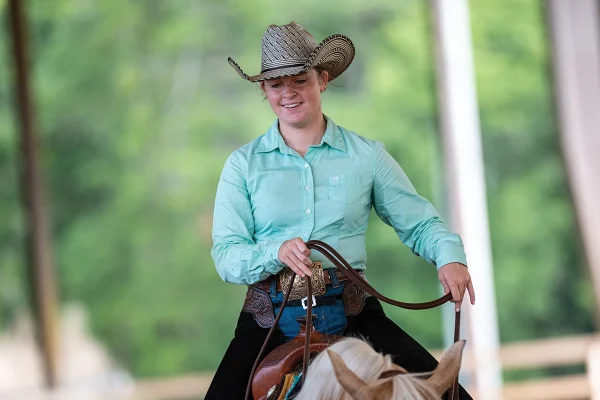
1. Make sure you’re in a lesson program where you can regularly ride a variety of horses.
2. Take note of the cues the warmup rider uses on your draw horse for various maneuvers, along with the horse’s temperament.
3. Read your horse’s description carefully and use the information provided.
4. If something goes wrong, just keep riding. Focus on your horsemanship and giving the correct cues.
5. Smile, have fun, and remember—every ride prepares you for the next horse you draw!
This article about tips for riding a draw horse appeared in the September/October 2025 issue of Young Rider magazine. Click here to subscribe!

