


Hunter jumping began in 15th century England, evolving from fox and hare hunting traditions where horses and riders followed hounds to chase animals. The horses had to jump fences between properties to continue the chase.
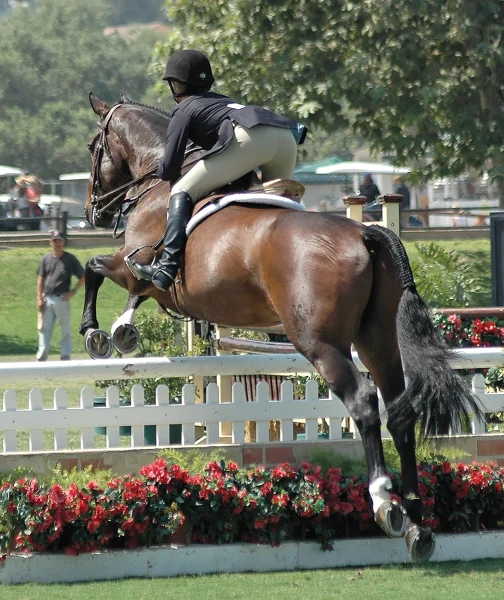
Over time, this style of chase-hunting developed into a show-ring discipline we now call hunter jumping. Riders went from training over rough terrain—jumping fences, gates, logs, bushes, hedges and ditches—to being in a show arena to compete in flat classes and courses that feature the natural wood, flowers, and greenery seen around fields and gardens.
While show jumping emphasizes speed and the technical aspects of jumping, hunter jumping consists of graceful movements with cadence and balance and is judged based on the horse’s relaxed rhythm and calm athleticism.
Horse Habits
If this sounds intriguing to you, your horse will need to master some key habits before you head off to a show. Any horse can be trained, although some have a more natural inclination toward this way of going than others.
◆ Good manners: Work with your horse on ground manners and respectful under-saddle behaviors. Be consistent with corrections and give rewards with praise when your horse shows the right response.
◆ Responsiveness to your aids: Set up boundaries while riding to help your horse learn what is expected. If asking for a more forward gait, try the ask/ask/tell method. First, ASK with light leg and a cluck. If the horse doesn’t respond, then ASK more firmly with more leg pressure and maybe a tap on the shoulder.
If your horse still isn’t persuaded to pick up the pace, then you should be as clear as you can and TELL him with some added spur, more clucking, a tap on the hip, and a firm verbal cue. “Tell” needs to be a strong enough cue that your horse responds immediately and with no delay.
Wanting to avoid the “tell” cue, your horse will start responding to the first, lighter “ask.” It’s all in the timing!
◆ Steady stride cadence: Use half-halts from your seat, leg, and hand to keep your horse steady to the jumps. Have him adjust his pace, cadence and form so he won’t need to add a tiny chip stride or take away a stride and launch at a jump from far away. You can practice this using ground poles and small cavallettis to add smoothness when asking your horse to lengthen or shorten his strides.
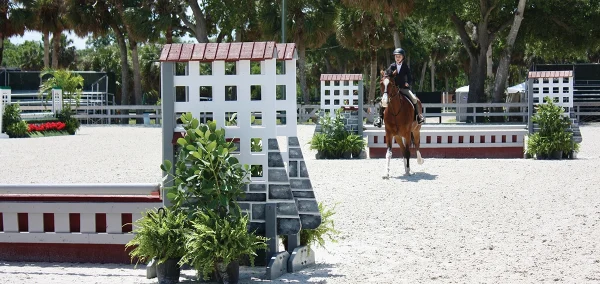
◆ Confident demeanor: Horses who feel comfortable in the ring, whether at home or a show, have an edge over other horses who suffer from stress, anxiety and spookiness. Desensitizing your horse will create a trusting bond and give your horse self-assurance.
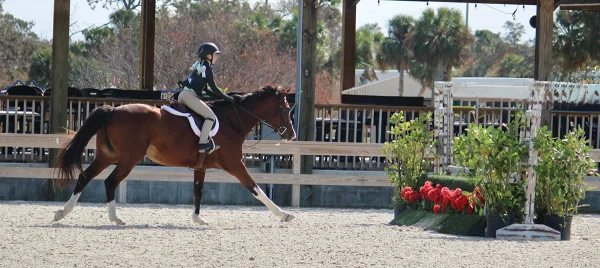
Rider Habits
Learning the positive habits needed to be successful in this discipline starts with the equitation rounds, where judges focus on the rider more than the horse and pay attention to the smallest details.
The goal of equitation is to ride polished and correctly, along with proving your ability to guide the horse with quality communication and non-obvious cues around the ring. In equitation, points will be deducted for improper leg and heel position, not closing your fingers around the reins, and slouching and looking down. Things like cutting arena corners and not getting your lead changes are also considered poor equitation skills.
◆ Get the right stride counts in your lines. This is super important to create a balanced performance over jumps in the hunter ring and place better; it also reflects a good partnership and rhythmic style to your course.
Riders who don’t count strides usually end up adding extra steps, making the approach to jumps chaotic and rushed, or they let their horse leave too early for a jump, making for a long, unsafe distance.
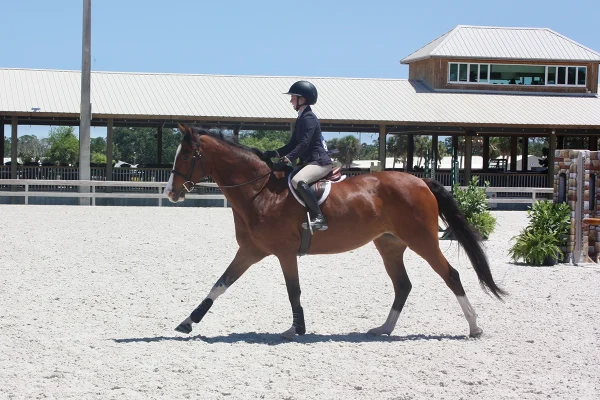
◆ Practice keeping your hands still and soft with your thumbs on top of the reins. This will not only improve your hold on the reins, it will also help make communication easier with your horse. Riders with busy hands give the impression of tugging on the reins with an unbalanced position in the saddle. This also will make your horse look uncontrollable and fidgety.
◆ Leaning forward and jumping is a big no-no. Tipping forward sometimes is a result of gripping too much with your knee. Your leg should hang long and relaxed with your weight in your heels, which will help it stay under your center of gravity instead of swinging back from the knee and pitching your body forward.
◆ Set aside time to ride in the two-point position every ride at the walk, trot and canter, with your seat lightly out of the saddle and your hip angle slightly closed. This will strengthen your core, giving you a more stable upper body. If you are strong, it will be much easier to avoid tipping forward, even when body tiredness sets in.
◆ You also need to accept responsibility for your horse’s mental and physical condition. Look for new ways to build your horse’s stamina and strength without risking burnout or injury by doing too many jumps and lead-changes. A group lesson or a trail ride might be an easy way to relieve the stress or boredom of everyday training—for both you and your horse!
◆ Teach your horse to be brave. Walking or trotting over small jumps reminds your horse to remain calm on the approach to fences and encourages him to rock back on his hocks and jump correctly with power from his hindquarters.
It’s important to prevent your horse from getting in the habit of refusing jumps due to low confidence. If your horse questions a jump, don’t allow him to turn away and re-approach it. Instead, try to stay centered and quiet while keeping your leg on for as long as it takes, until he can hop over it from a halt or walk (this is why practicing over tiny jumps is so important).
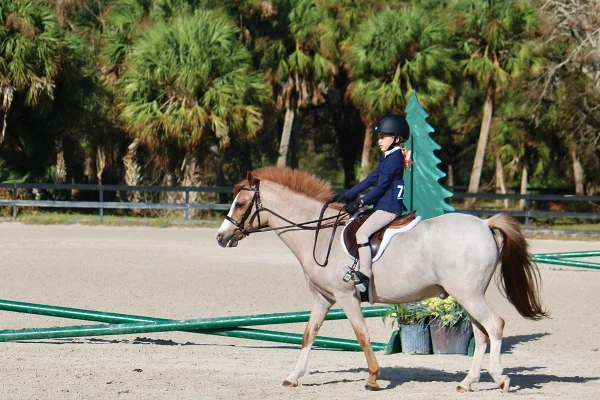
◆ Ask for help from a trainer to avoid creating bad habits like ducking out, refusing, or rushing over jumps.
Any age or skill level can enjoy the hunter discipline, and there are many opportunities for growth and improvement. From ground poles and cross-rails to the biggest of jumps, good hunter habits will inspire you and your horse to new heights.
This article about hunter habits appeared in the September/October 2025 issue of Young Rider magazine. Click here to subscribe!

