


Every horse needs regular care from an equine veterinarian and a farrier. But what can you do to help these equine professionals when they see your horse? We talked to two experts to give you advice on how to be the best horse helper possible.
The Veterinarian
Christine Sutherland, DVM, says your horse’s veterinarian makes sure your horse is healthy, gets the right vaccinations, and is on the correct deworming schedule. They also notice if there are any problems, like lameness.
“Veterinarians make sure that the horse moves the way he’s supposed to move, but we’re really trying to prevent sickness and keep the horse comfortable so that he can perform his job happily,” Dr. Sutherland says.
Be Observant
If your horse is going to have a checkup, pay attention to how he’s acting. Is he having any problems? Any issues with his diet?
Dr. Sutherland says you should know when and how much your horse gets fed each day, and some of his history. Has he ever colicked or had an allergic reaction? What does his typical behavior look like?
“It’s good to know what your horse’s normal functions are,” says Dr. Sutherland.
Prepare Your Horse
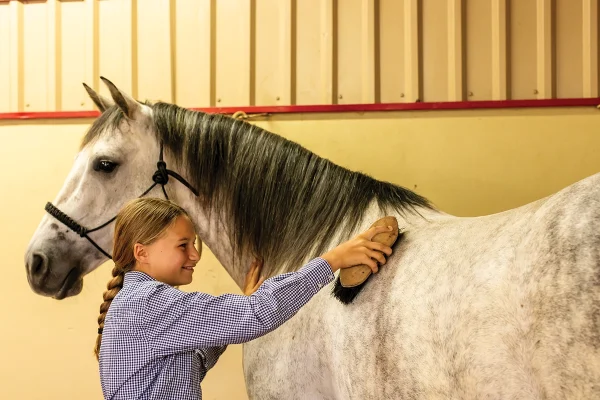
Have your horse ready for your veterinarian’s examination. This means catching him if he’s loose in a pasture or stall, brushing off excess dirt or mud, picking out his hooves, and applying fly spray. This will not only be respectful of the veterinarian’s time, it will also make the exam go more smoothly.
“These things will make the exam go so much better for everyone,” says Dr. Sutherland.
Handling Tips
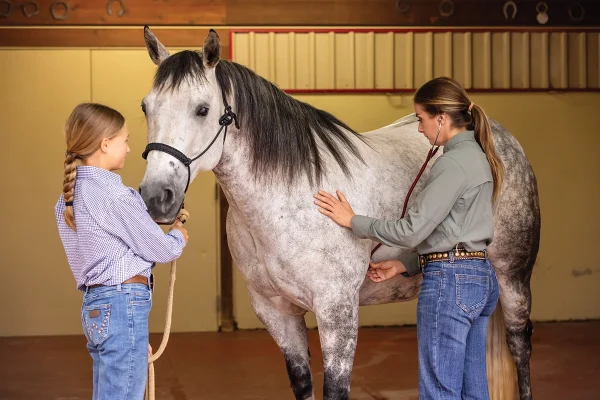
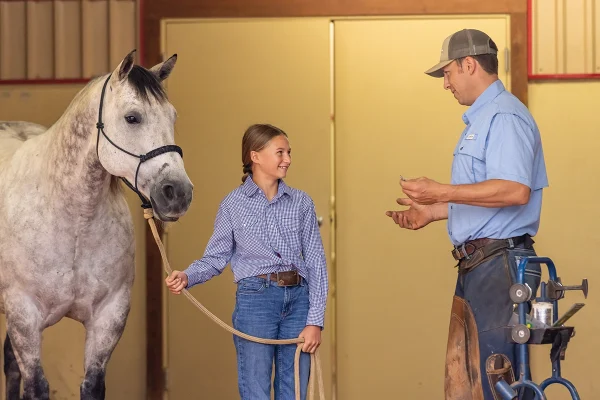
Stand at your horse’s head, just to the side, on the same side as the veterinarian is standing. Hold your lead rope correctly and short enough to prevent the horse from wandering off.
“You need to be paying attention during the exam, be aware of your surroundings, and make sure we’re not getting on top of each other while I’m looking at your horse,” says Dr. Sutherland. “And not being on your phone—that keeps us all safe. Be aware of your horse’s expression: If his ears are back, that’s a warning, and if I’m listening to gut sounds [with a stethoscope], I might not see it. Being observant of all of the behaviors is really important.”
Look for Opportunities to Learn
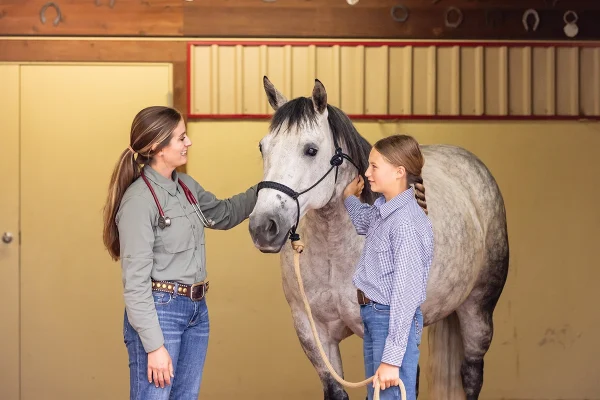
Dr. Sutherland enjoys working with young owners and their horses, and often teaches them different tips about horse care.
“The more you can be involved with the veterinary care of your horse, the better,” says Dr. Sutherland. “We need more horse veterinarians, so it’s really exciting for us to be able to teach young owners what we’re doing, and explain things to you, which also makes you better horse owners.”
The Farrier
Farrier Rusty Van Soelen says a farrier maintains your horse’s hoofcare needs. This includes trimming and shoeing his hooves, as well as checking for any issues that could contribute to lameness.
“Farriers keep horses’ feet in good shape so they can maintain soundness,” Rusty says.
Pay Attention
The number one thing you can do as a horse owner while your farrier is working on your horse is to pay attention.
“Be observant to any situations that could unfold while the farrier is working on your horse while you’re holding him,” Rusty says. “That way you can see issues before they arise.”
Be ready to hand a tool to the farrier if asked, or push the cart or of the way, Rusty suggests. And stay off of your phone!
“Avoid playing on your phone,” Rusty says. “Daydreaming, walking around and not paying attention, and letting the horse pull away can make it harder for the farrier to do his job.”
Stand in the Right Spot
When your farrier is working on one side of your horse, you want to stand on the same side as the farrier, close to the horse’s head. Make sure you’re not wrapping the rope around your hand and keep the lead length short.
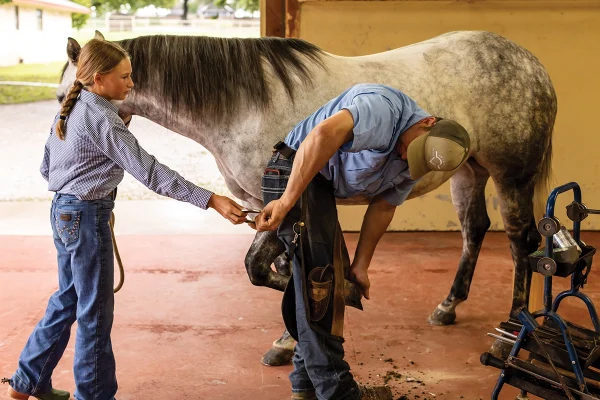
“This way, if there’s an issue, the horse can shy away from the farrier and not onto you, and vice versa,” Rusty says. “If he shies away from you, he won’t go onto the farrier.”
Ask Questions
Don’t be afraid to ask your farrier questions, Rusty says. However, be aware of the job he’s trying to complete, and don’t interfere with his work.
“I always appreciate questions, as long as they’re not standing in between me and my work,” Rusty says.
Meet the Veterinarian and Farrier
Christine Sutherland, DVM, worked at Reata Equine Hospital as an associate veterinarian from 2014-2025, and in June 2025, started her own practice, Horizon Equine Veterinary Services in Weatherford, Texas. She loves educating clients, and has has three horses that she enjoys riding.
Rusty Van Soelen is a farrier located near Mineral Wells, Texas. He has been shoeing horses since he was 12 years old and apprenticed under another farrier in Texas in 2016 before launching his own farrier business in 2020.
This article about how to help your veterinarian and farrier appeared in the September/October 2025 issue of Young Rider magazine. Click here to subscribe!

