


The thrilling competitive sport of show jumping, also known to eventers as stadium jumping, traces its roots to England, where the 18th century Enclosure Acts made the need to jump fences during fox hunting excursions much more commonplace.
The first known jumping show was held in Ireland in 1864, with 13 jumping obstacles set at 3 feet 6 inches tall. At the Stockholm, Sweden Olympics of 1912, jumping was defined as a sport and formatted the way we jump today.
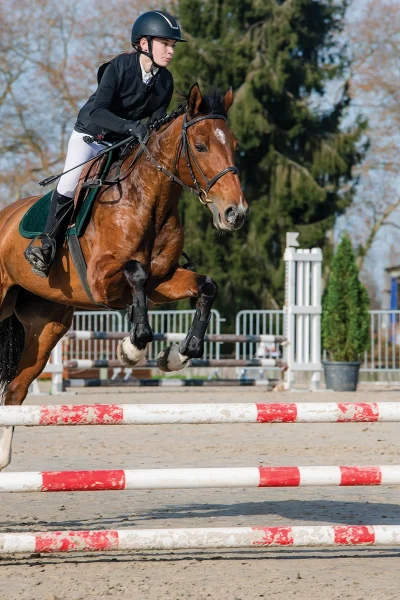
Jumping Competition
Beginning jumpers start out at lower heights offered at schooling shows over ground poles and cross-rails. This allows new jumpers, whether horse or rider, to gain experience at a show setting before moving up the levels to higher fences at rated venues.
The goal of show jumping is to navigate your horse through a jump course and finish in the least amount of time without knocking down any rails. It is scored completely objectively, as opposed to the subjective judging of hunter classes.
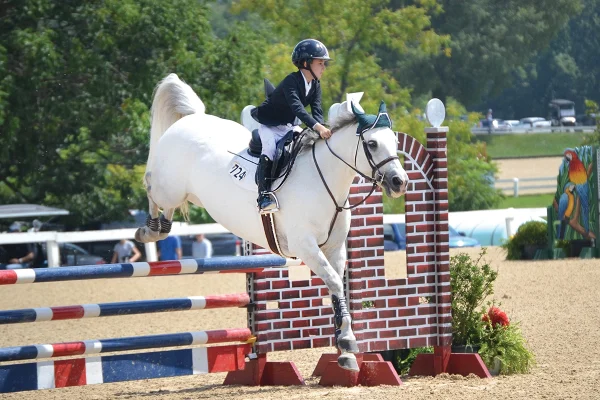
A fault occurs when a pole or fence is knocked down by the horse, if the horse refuses a jump, and when horse exceeds the time allowed to complete the course. Lowering the height of a jump results in a 4-point deduction, while time penalties are smaller. Competitors are ranked in the class based on number of faults.
Swift and Safe
One of the biggest challenges riders face is learning to go fast through a course—safely.
“At the lower levels, riders are often mistakenly told to simply go fast, without learning the proper riding techniques necessary to become successful jumpers over larger fences,” says Kris Di Carlo, a jumping trainer located in Bradenton, Fla.
He says that every horse is an individual and needs to feel secure while jumping fences.
“No horse should be jumping at a level that creates physical and/or mental stress and unease. As horse lovers, we all want our horses to enjoy their training and tasks we ask of them. All good jumpers must be brave and careful, which can be a hard combination to find.”
Nervous Nellies
It’s very common for riders to deal with anxiousness surrounding jumping.
“Everyone has their own way of coping, and you have to find the one that works best for you,” Kris says. “I suggest focusing on your course, the fences, and the lines within it.”
For horses that seem to get a case of nerves, he offers some tools that you may find helpful.
“Proper training with a professional trainer and solid flatwork can help any nervous horse navigate the more complex situations and difficult task of completing a course,” Kris explains. “Additionally, a confident and educated rider can provide the support needed to guide him through it.”
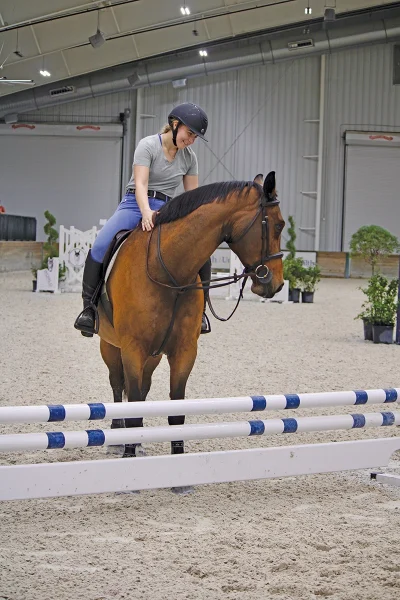
Jumping Skills
The fundamentals of a good round are adjustability, rhythm, and turns.
“The skills jumpers need to practice are moving forward and having your horse come back to you using leg, seat, balance, and rein cues to find distances to the jumps with steady success from start to finish,” says Kris. “Learning the correct way to turn your horse properly and safely is also an important skill, as riders want to cut corners to save time. Slicing fences, where you set up your jump line at an angle instead of coming straight on to a jump, will help you find the correct takeoff distance and shave tenths of seconds off your show clock.”
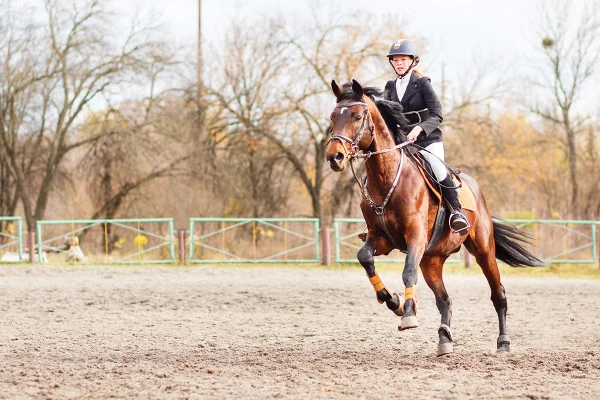
Keeping your position from falling forward will help with all of these aspects.
“Sit up and be tall in the saddle,” Kris advises.
Lead Changes
“Jumpers shouldn’t over-school flying lead changes,” says Kris. “A horse can become sour and grow tired of the maneuver. Practice going straight and doing simple lead changes, where you ask the horse to trot between leads. This will help his flying change stay fresh and motivated.”
Counting Strides
Use half-halts and supporting leg while learning to add or leave out strides.
“Practicing poles and learning to count strides will help you develop the skills needed to adjust and ride out the distances smartly,” Kris says.
Healthy Tips
◆ Practice and prepare for every situation you will have to face during a course. This will help take some of the unpredictable elements out of jumping.
◆ Cover areas of training that your horse struggles with. If loud noises or other distractions bother your horse, make desensitizing a normal part of your rides at home.
◆ Eat healthy and stay hydrated.
◆ Speak, think, and react kindly to yourself and your horse in stressful situations.
◆ Smile with confidence in all the work you have put into your skills even when things don’t go as planned.
◆ Live and learn. Be safe and remember there is much to learn about this sport.
◆ Ask for help from a professional. Setting up lessons and training rides is one of the smartest things you can do to be at the top of your jumping game.
With these tips, you’ll be bringing home the jumper ribbons in no time!
This article about show jumping appeared in the May/June 2025 issue of Young Rider magazine. Click here to subscribe!

