


In August of 2021, just days after finishing a week of advanced camp at Black Dog Stables in Gibsonia, Pa., 10-year-old equestrian Elizabeth Loughrin—who friends and family call “Sis”—started experiencing daily headaches and nausea. After several visits to the emergency room with no clear answers, her doctors ordered bloodwork.
The results were unthinkable: Sis had leukemia, a type of cancer.
Battling for Recovery
Inside our bones is a spongy tissue called bone marrow, which produces, among other things, white blood cells that fight off infections. But leukemia causes the bone marrow to produce white blood cells that don’t function correctly, making people sick.
Sis needed to start chemotherapy immediately. “Chemo,” as you may have heard it called, uses powerful chemicals to kill fast-growing cancer cells. But this comes with many unpleasant side effects, including tiredness and nausea. The chemo would also cause Sis to lose her hair. She was scared.
Sis’s doctors developed a two-year treatment plan, and she quickly went into remission; the signs and symptoms of her cancer had disappeared.
But a year later, during a routine test, doctors found cancer in Sis’s bone marrow. Her illness had returned, now more dangerous than ever.
Bone Marrow Transplant
Sis’s only hope was a procedure called a bone marrow transplant. First, Sis’ doctors would use heavy doses of chemo and radiation to destroy her diseased bone marrow, and she’d have to spend a whole month in the hospital.
Then, they’d infuse healthy bone marrow into Sis’s body, where it would hopefully create new, healthy blood cells.
But before any of this could happen, Sis needed a donor—a living person willing to share their bone marrow with someone who is sick. Doctors tested Sis’s entire family, including big brothers Carter and Jack, but no one was a match. Next, doctors contacted an organization called the National Marrow Donor Program, a worldwide nonprofit organization that connects patients who need transplants with generous donors.
A woman in Germany ended up being the best match for Sis. That woman’s bone marrow was collected and shipped halfway around the world, where it would save the life of a girl she had never met.
On March 3, 2023, Sis underwent her bone marrow transplant.
“It was actually kind of anticlimactic,” she laughs. Compared to the heavy doses of medicine she was given before the transplant to destroy her bone marrow and suppress her immune system, being hooked up to some tubes for a few hours felt like no big deal.
Careful Recovery
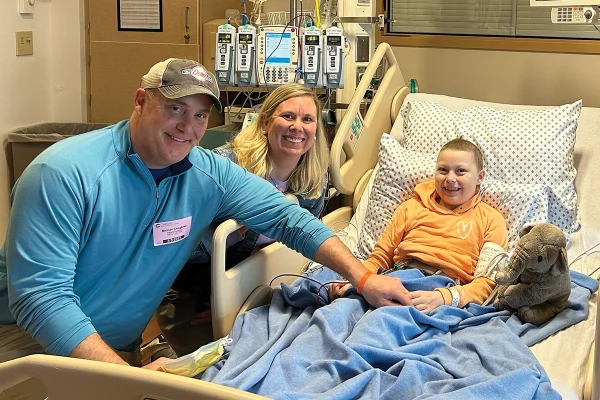
After the transplant, Sis had to spend 40 more days in the hospital. Doctors needed to monitor her constantly; a lot could go wrong.
First, Sis’s body needed to accept the new bone marrow, instead of fighting it off. Then, the bone marrow has to start growing new blood cells, which can take a few weeks. It’s hard to tell, at first, whether the transplant is successful.
One hundred days after a bone marrow transplant is an important milestone. If Sis was doing well by then, it meant the transplant was a success—and it was! She could now start weaning off some of her immunosuppressants.
“For those 100 days, I had to be really careful about germs, where I went, and who I was around,” says Sis. “I couldn’t eat any fruit that didn’t have skin that could be peeled or cut off. I couldn’t even share a bag of chips. It was a lot.”
In the fall of 2023, four months after her transplant, Sis returned to school and some of the sports she loved, including basketball. But she desperately missed riding, and couldn’t return to the barn for a whole year.
Even though she’d made it past that important 100-day mark, her immune system was still very delicate. And it was the hay at the barn—not the horses—that put Sis at risk. Hay can contain fungus spores that don’t bother most people. But to those with weaker immune systems, the spores can cause deadly infections. So Sis waited patiently.
Return to Riding
At a doctor’s appointment one year after her transplant, Sis’s medical team asked if she had any questions. She had only one: When could she return to riding?
Sis had recovered well from her transplant, and her cancer was gone. When her doctors gave her the all-clear, Sis couldn’t get to the barn fast enough.
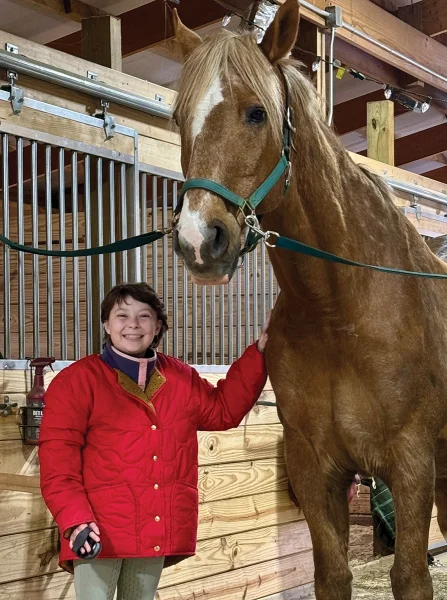
When she climbed up into the saddle, almost two and a half years after her diagnosis, she felt like she’d hardly been gone at all. Up on Moose, a 17.3-hand Quarter Horse that she rode regularly before she got sick, Sis felt right at home.
“It was just really exciting,” she recalls. “I was happy to be back on the horse, and back at the barn with everybody.”
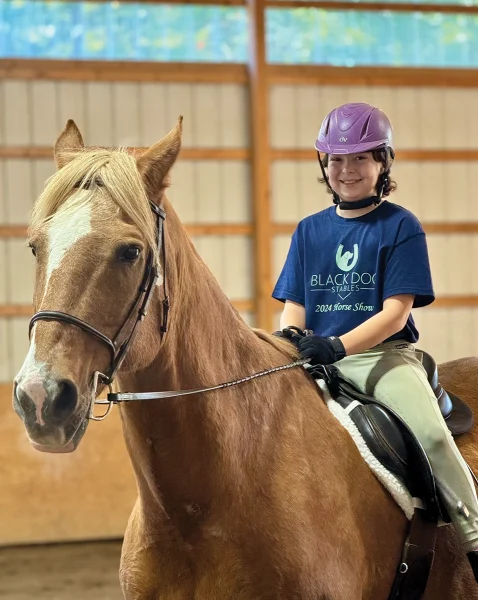
In the fall of 2024, just months after her return to riding, Sis competed in a schooling show at Black Dog Stables—her first show ever—and earned a blue ribbon.
Inspiring Others
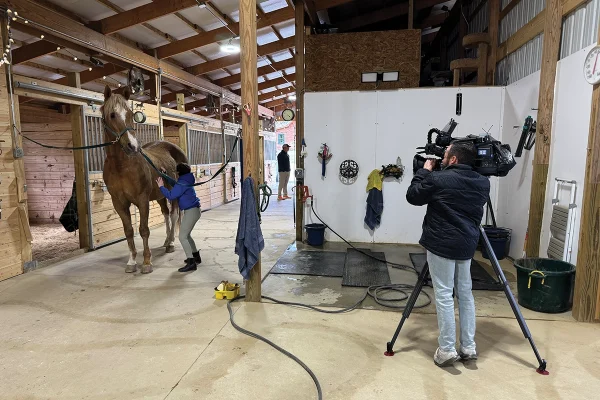
This July, Sis turned 15. More than three years have gone by since her bone marrow transplant, and doctors have high hopes that her cancer will never return. Sis has been on the news twice, and is a role model to her family and friends for bravely facing a scary diagnosis and a long, tough recovery.
“No matter what was asked of her—painful procedures, medicine that made her sick, or many unplanned trips to the emergency room—Elizabeth kept her head up,” Sis’s mom Lindsay says.
“She never lost her smile,” says her dad, Mike. “She never complained. She had no quit.”
Her parents, inspired by their daughter, created the Elizabeth Strong: Grit and Grace Foundation, which helps other families at Children’s Hospital of Pittsburgh whose children are facing similar diseases. Sis shares her story at fundraisers, advocating for the hospital and giving hope to patients like her.
But Sis doesn’t see herself as anything special; she’s happy just to be a normal kid again. She’ll start tenth grade in the fall, play soccer and basketball, and hang out with her friends.
And without a doubt, she’ll be spending lots of time at the barn.
This article about Elizabeth “Sis” Loughrin appeared in the July/August 2025 issue of Young Rider magazine. Click here to subscribe!

