


From the moment you step into the show arena, you’re being judged on your horsemanship and how you handle yourself when riding with others. When you’re aware of your surroundings, you’ll pick the best place on the rail for your horse to be seen. When you are careful around other horses, you’ll keep everyone as safe as possible. That’s why proper arena etiquette and safety practices are key.
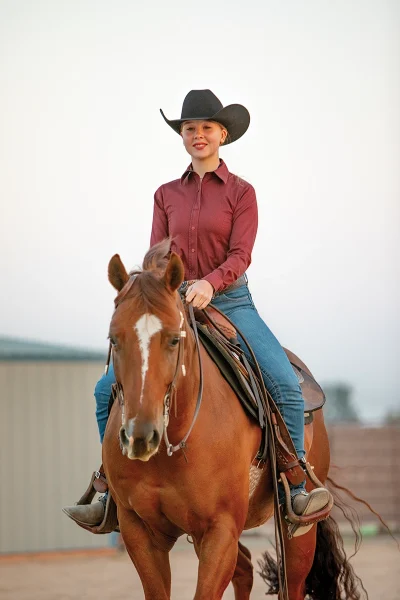
In an Interscholastic Equestrian Association (IEA) show, riders in grades 4 though 12 can show without owning a horse in hunt seat, western, or dressage. For western, you draw a horse to ride and then enter the arena for judging at the rail, then line up and wait for your turn to complete a horsemanship pattern.
For the rail work, it’s important to have your own space so your horse can be seen. It’s also important not to bunch up so that horses who may not like to be near others don’t kick out. When it comes to pattern time, it’s easy to relax too much when you’re waiting for others—and forget that you’re still showing and need to keep your horse well positioned.
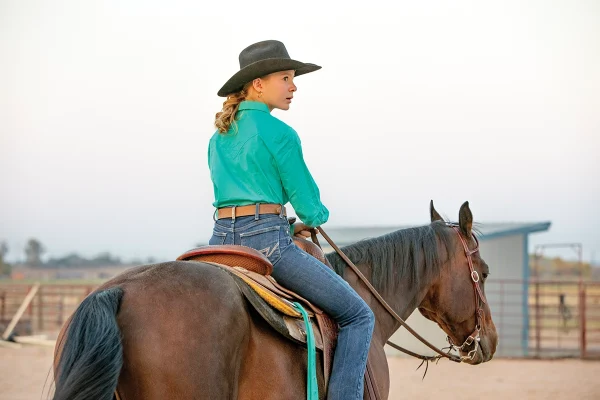
Here, trainer and IEA coach Ariel Hug reviews what she teachers her team members to do during each show: to show respect to others and to keep their own horses in a safe and visible spot as they show.
She’ll guide you through each portion of the show to help you know how to show off your horse and show your respect.
Entering the Arena
When it’s your turn to enter the arena, the announcer will call for your class to line up. That doesn’t mean to group close together to push to get into the pen. Ariel suggests that her riders go to the back of the line, make sure they have space around them, and enter last if riders are packed around the entrance.
If there’s a ring steward, that person may help riders line up in a certain order or know what horses to keep away from others (some horses drawn at shows are great to ride, but may be known to kick out if too close to others). Ariel tells her riders to spread out and line up in an orderly fashion even if there’s not a ring steward on duty.
When it’s time to walk into the ring, remember you’re being judged from the start.
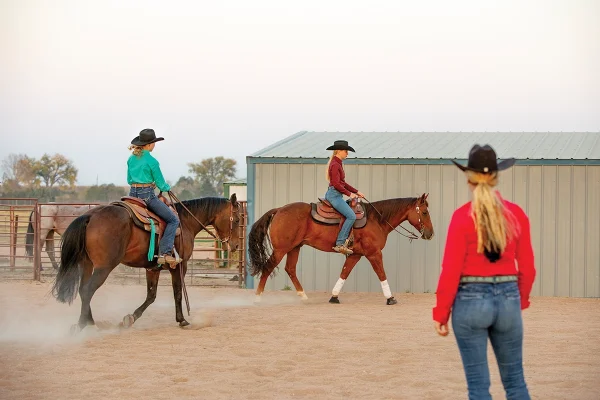
“Don’t enter in a clump,” Ariel says. “You’ll enter the arena and turn to the right to stay on the rail. If you find others huddling close to you, walk straight for a bit, then circle back to find your own spot. Give your horse some space as you get used to riding him.”
Circling back out of the group can show the judge that you’re aware and have horse sense. You’ll also want to make sure that you don’t ride up too close to someone else.
“You don’t want to get kicked or put someone else in a bind,” Ariel says. “It’s a safety factor and it’s just rude to block someone else. You want to have enough space so that the judge can see everyone all the time.”
If you need to create space, you can also ride deep into the corners and hope that other riders will cut the corner and get ahead a few steps. The trick shows that you can create space and direct your horse on the path you choose: straight until you give the cue to turn.
Gait Changes
When the announcer calls for a move from the walk to trot or trot to lope, check your surroundings before you take off.
“Let the rider in front of you have a few seconds to go into the new gait so that you don’t take off and block them or have to pass immediately,” Ariel says. “But if that rider can’t get their horse to move on, go ahead so you don’t look like you missed the gait change, too.”
Passing Zone
If your horse is much faster than those in front of you, it’s better to pass than to break gait.
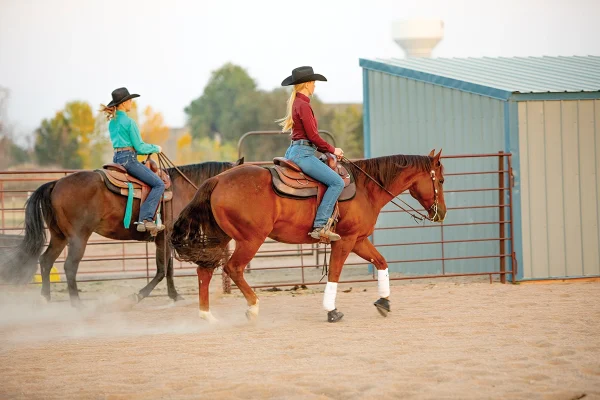
“It’s fine to pass to maintain the gait,” Ariel says. “You’re passing because the person in front of you is too slow or not responding. Try to pass when you have two horse lengths ahead of you. Move to the inside by two horse widths. Then when you have another two horse lengths in front of the other horse, move back to the rail. That’s a good distance to help horses not feel cranky, like you’re getting in their space.”
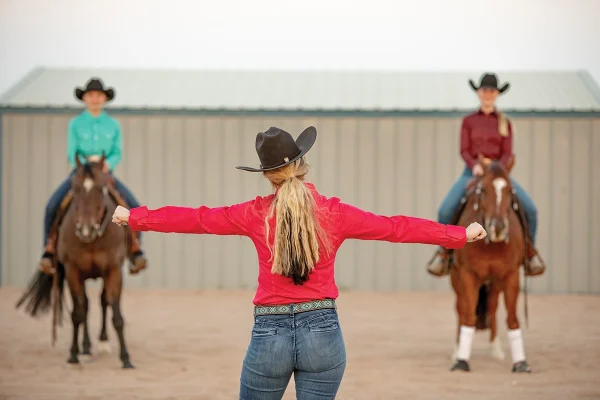
After you pass, make sure to leave enough space so that the horse behind you doesn’t get too close right away. Turn your head back to look and make sure that you’re allowing enough space.
“I like to see riders turn their heads to make sure they won’t be cutting anyone off,” says Ariel. “You’re showing the judge that you have awareness. If you see a mess and give it a wide berth, you show you’re a good horseman. This is especially true if you see a horse spook or refuse to move on. Give some space!”
Speak Up
In IEA shows, you’ll ride a horse you may not know by drawing his name. You may find out tips and information about the horse—including if he doesn’t like being around others.
“Some great beginners’ horses for IEA shows are known to not like other horses,” Ariel says. “That doesn’t mean they aren’t safe for the rider. They’ll take care of you but may not like being penned in with other horses. It’s your job to advo-cate for that horse and let others know, too.”
After your rail work, you’ll line up at one end of the arena to await a horsemanship test. This is the time when you need to remember that you’re still showing and advocate for your horse’s space.
“If someone crowds you and packs in too close, say, ‘I’m doing the best I can, but mine’s not super friendly, can you give us some space?’ or just move to the end of the lineup where you can make sure you have space,” Ariel suggests.
Pattern Pointers
When it’s your turn to walk to the cone and prep for your horsemanship pattern, make sure to look at the judge. When the judge nods, you can start your pattern.
“Do your pattern, then stop at the last cone and look at the judge again,” Ariel says. “Be prepared that the judge may take a moment to look up. This is your time to nod your head and acknowledge him or her.”
Show Class
“When a class is over, I like when my riders tell riders from other teams that they did a good job,” Ariel says. “When you’re done showing, tell others congratulations, or give a compliment about their show outfit or ride. I want my riders to be good humans. It just makes somebody’s day to hear a compliment, even if they didn’t win. And of course, I don’t put up with badmouthing or talking about
other riders.”
Once you dismount and are done for the day, remember to thank the volunteer who holds your horse or the horse’s owner, too.
“IEA requires are lot of volunteers to take time to help,” Ariel says. “We wouldn’t be able to do this without the horses and handlers that come just so our teams can show. We have to make sure to say thanks and show respect to everyone.”
This article about arena etiquette and safety appeared in the May/June 2025 issue of Young Rider magazine. Click here to subscribe!

